Teen-Focused Resources · TE-10
Private Journal Prompts
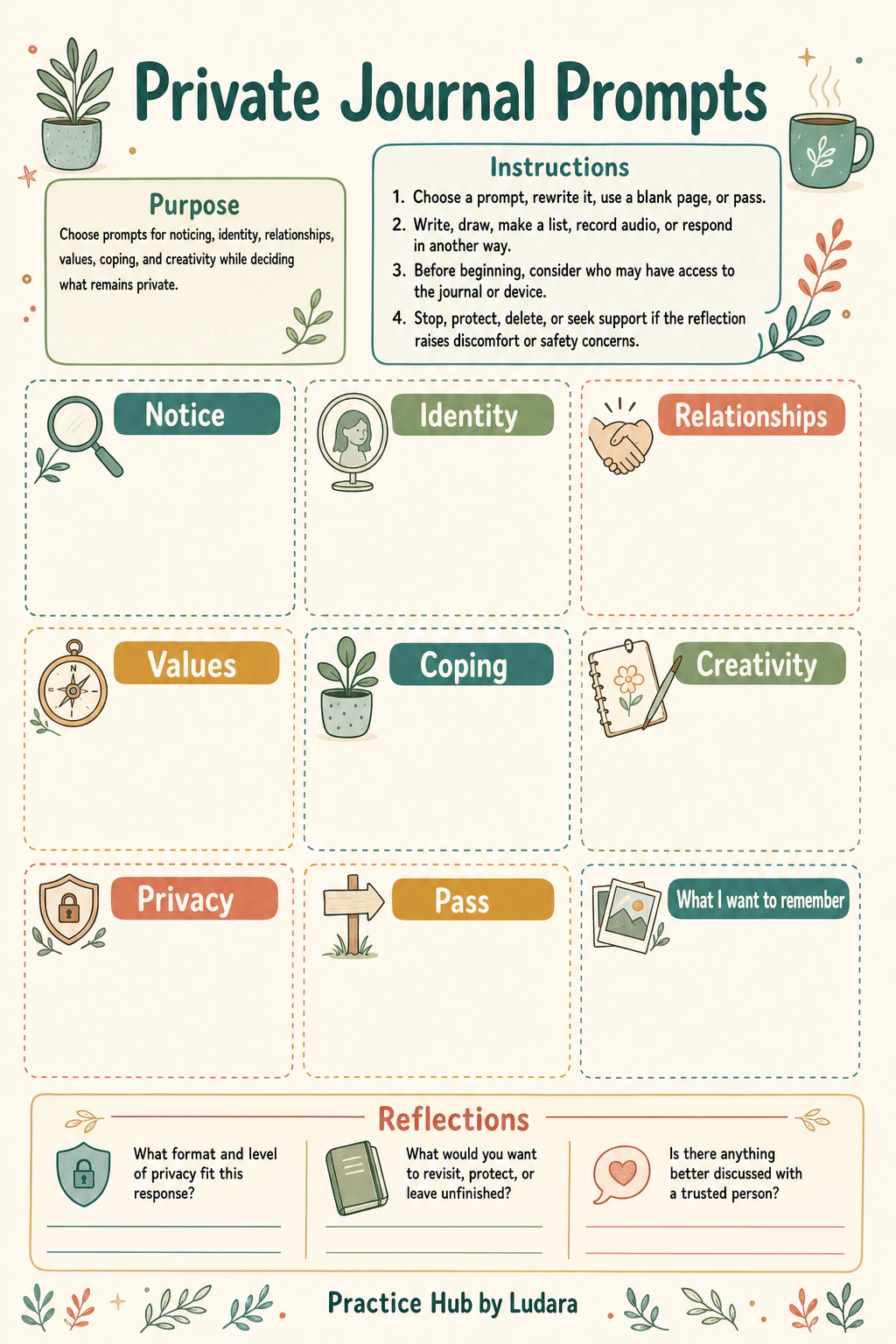
Choose a journal prompt about identity, relationships, values, coping, or creativity, and decide how to respond and what you want to keep private.
For clinician-facilitated use
This is a professional resource, not a child-facing online service. A licensed clinician or other qualified adult must determine suitability, explain and adapt the activity, and supervise its use. Do not direct a child to access this webpage independently or enter client information.
An adult professional should download the full-resolution WebP, which includes margins for printing. Read the guidance below before using it.
How to use it
- Choose a prompt, rewrite it, use a blank page, or pass.
- Write, draw, make a list, record audio, or respond in another way.
- Before beginning, consider who may have access to the journal or device.
- Stop, protect, delete, or seek support if the reflection raises discomfort or safety concerns.

Questions to explore
- What format and level of privacy fit this response?
- What would you want to revisit, protect, or leave unfinished?
- Is there anything better discussed with a trusted person?

Notes for the person facilitating
Explain that journals may not be private in every home, school, program, device, or legal context. Do not collect, read, photograph, or share entries without an appropriate basis, clear expectations, and consent consistent with policy and law.
Ways to adapt the activity
- Use disposable or erasable responses.
- Offer abstract art, fiction, or third-person prompts.
- Store responses with client-chosen privacy protections where permitted.
Professional use and fit
Before using this resource, a licensed clinician or other qualified adult should decide whether it fits the person, setting, goals, accessibility needs, and applicable local policies.