Teen-Focused Resources · TE-01
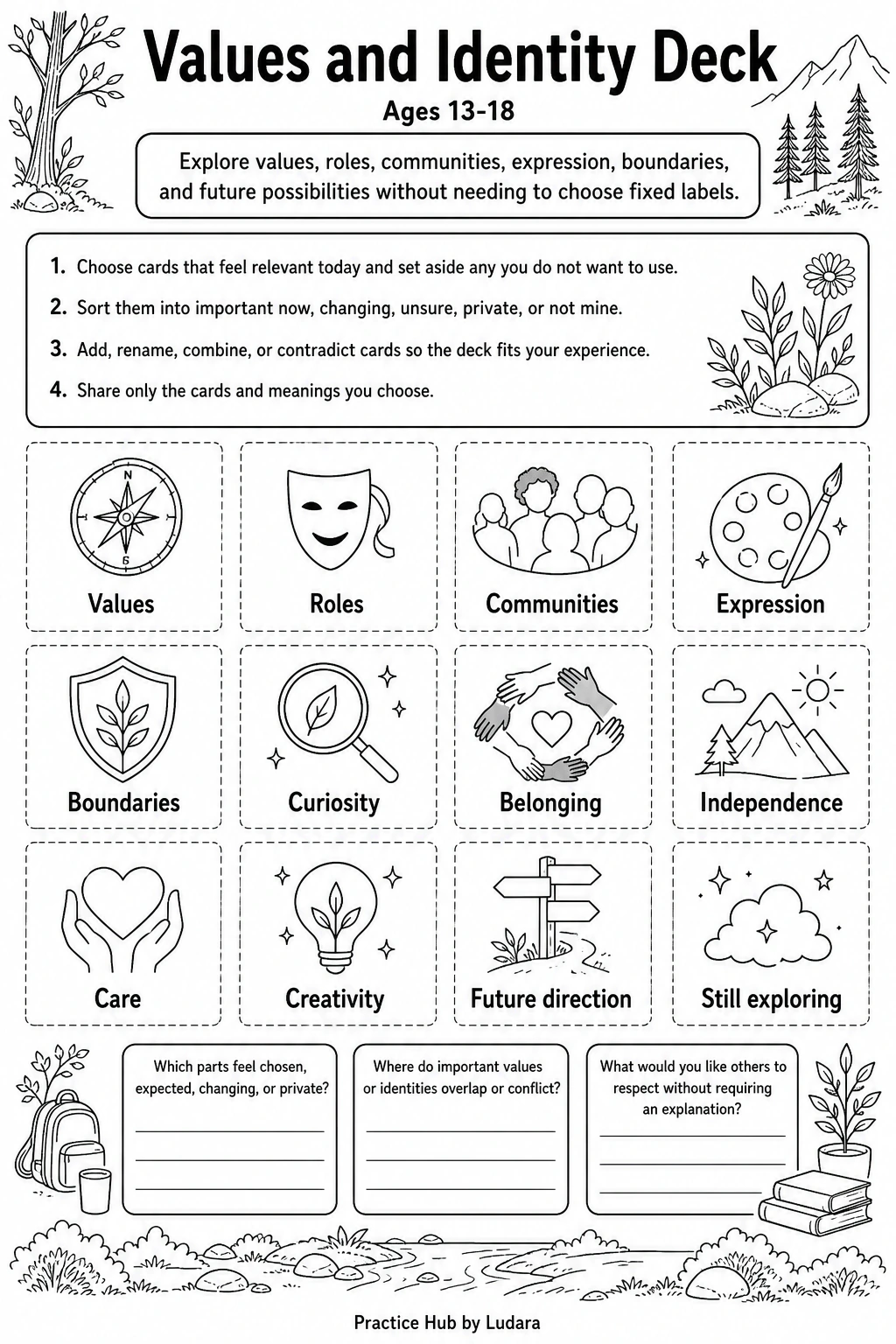
Values and Identity Deck
Sort cards about values, roles, communities, expression, boundaries, and possibilities without having to settle on a label.
For clinician-facilitated use
This is a professional resource, not a child-facing online service. A licensed clinician or other qualified adult must determine suitability, explain and adapt the activity, and supervise its use. Do not direct a child to access this webpage independently or enter client information.
An adult professional should download the full-resolution WebP, which includes margins for printing. Read the guidance below before using it.
How to use it
- Choose cards that feel relevant today and set aside any you do not want to use.
- Sort them into important now, changing, unsure, private, or not mine.
- Add a card, rename it, combine ideas, or include things that seem to contradict each other. The deck should fit your experience.
- Share only the cards and meanings you choose.

Questions to explore
- Which parts feel chosen, expected, changing, or private?
- Where do important values or identities overlap or conflict?
- What would you like others to respect without requiring an explanation?

Notes for the person facilitating
Use cultural humility and let the teen define each card. Do not infer identity, require disclosure, or assume that sharing is safe in the teen's family, school, peer group, or community.
Ways to adapt the activity
- Use a private digital sort with adjustable visibility.
- Work with a smaller card set or use images without labels.
- Invite an abstract collage instead of direct identity categories.
Professional use and fit
Before using this resource, a licensed clinician or other qualified adult should decide whether it fits the person, setting, goals, accessibility needs, and applicable local policies.