Teen-Focused Resources · TE-03
Stress and Load Check-In
Look at the demands taking your energy, how you are doing, and where you need support.
For clinician-facilitated use
This is a professional resource, not a child-facing online service. A licensed clinician or other qualified adult must determine suitability, explain and adapt the activity, and supervise its use. Do not direct a child to access this webpage independently or enter client information.
An adult professional should download the full-resolution WebP, which includes margins for printing. Read the guidance below before using it.
How to use it
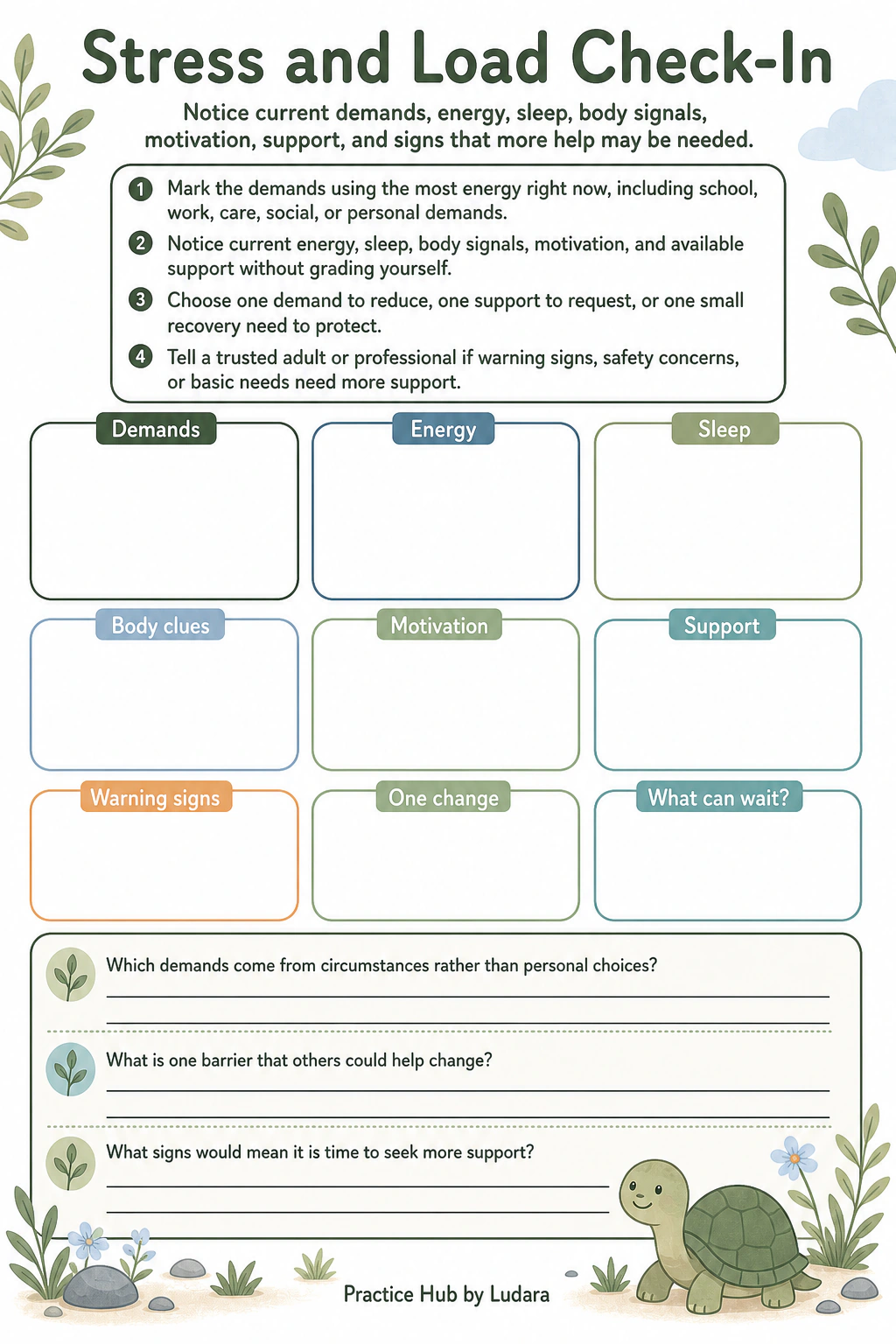
- Mark the demands using the most energy right now, including school, work, care, social, or personal demands.
- Notice current energy, sleep, body signals, motivation, and available support without grading yourself.
- Choose one demand to reduce, one support to request, or one small recovery need to protect.
- Tell a trusted adult or professional if warning signs, safety concerns, or basic needs need more support.

Questions to explore
- Which demands come from circumstances rather than personal choices?
- What is one barrier that others could help change?
- What signs would mean it is time to seek more support?

Notes for the person facilitating
Use as a conversation aid, not a diagnostic, burnout, depression, or risk assessment. Follow appropriate safeguarding and clinical evaluation processes when warning signs, functional decline, or safety concerns emerge.
Ways to adapt the activity
- Use icons, colors, or an energy budget instead of written ratings.
- Complete verbally with a trusted adult or communication support.
- Separate controllable demands from systemic or environmental barriers.
Professional use and fit
Before using this resource, a licensed clinician or other qualified adult should decide whether it fits the person, setting, goals, accessibility needs, and applicable local policies.