Decide whether a new role should exist
Before you hire, work out what needs doing and whether a new role is the right way to get it done.
Open guide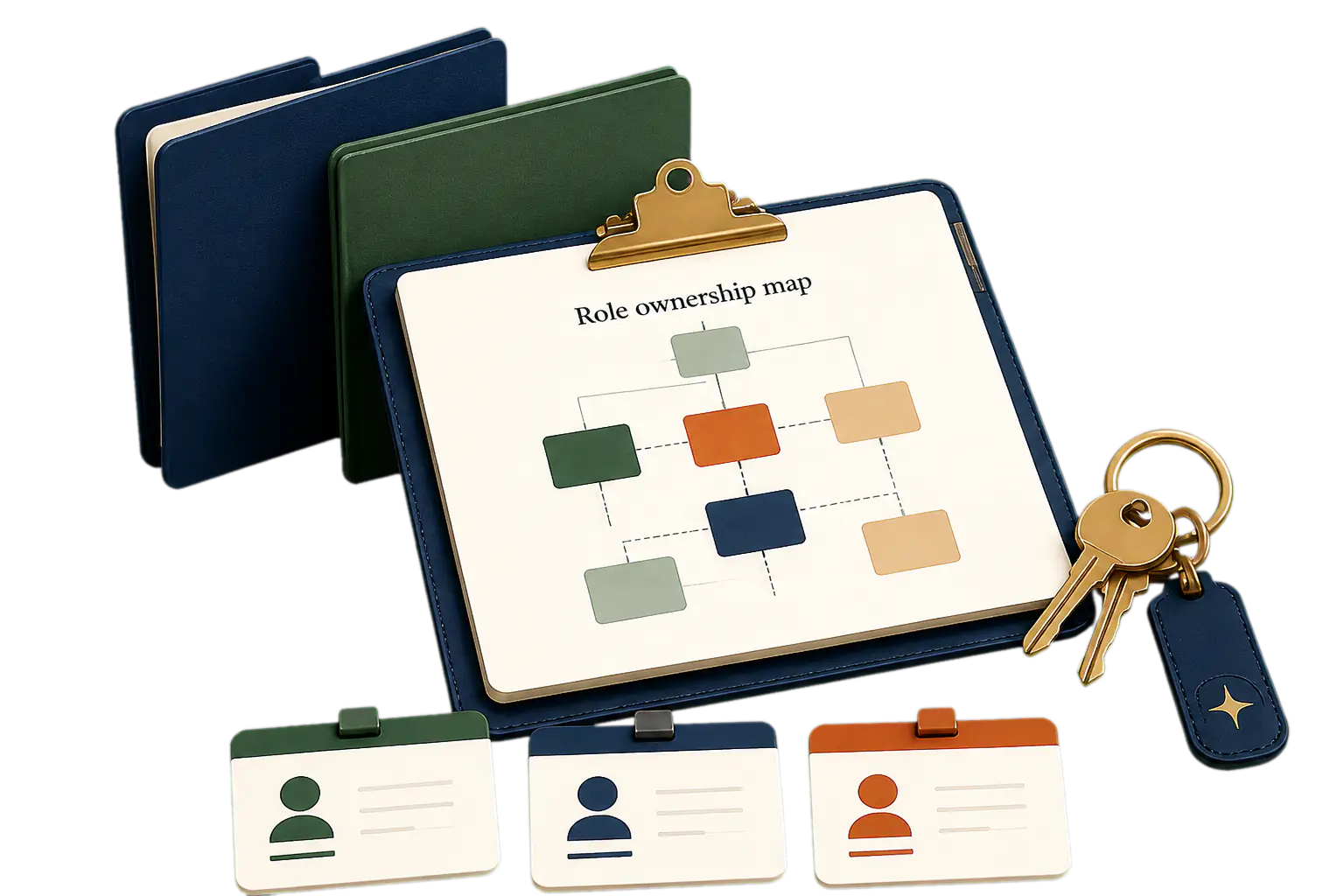
People and team operations
Work gets missed when everyone thinks someone else is handling it. Set clear responsibilities, plan handoffs, and give people the access and support they need.
Each guide explains what to do, what to save, and when to bring in qualified help.
Before adding a role, check whether you need another person or a better way to share the work.
Before you hire, work out what needs doing and whether a new role is the right way to get it done.
Open guideExplain what a role is for, what it owns, and where its decisions and handoffs begin and end.
Open guideDecide who handles hiring, then plan the tasks, access, and support a new person will need when they arrive.
Set the stages and responsibilities for hiring before candidates enter the process.
Open guideGive a new team member a clear first month, with someone to teach the work and regular chances to ask for help.
Open guideCheck whether responsibilities and access still match. When someone leaves, make sure another person can pick up the work.
Check how a role has changed and whether its access, backup, and handoffs still support the work.
Open guideCoordinate a departure's work, access, equipment, records, and communication after the required decisions are settled.
Open guideWhen supervision is part of the team design
Use the clinical supervision checklist to agree on the purpose, how to get help, how feedback works, and what happens when a concern needs more support. Be clear about where supervision ends and management begins. Your profession’s and state’s requirements still apply.
Open the clinical supervision checklistEmployment, worker classification, pay, licensure, and clinical decisions need qualified review. These guides help you gather the facts and questions so that conversation is useful.