Teen-Focused Resources · TE-04
Playlist Reflection
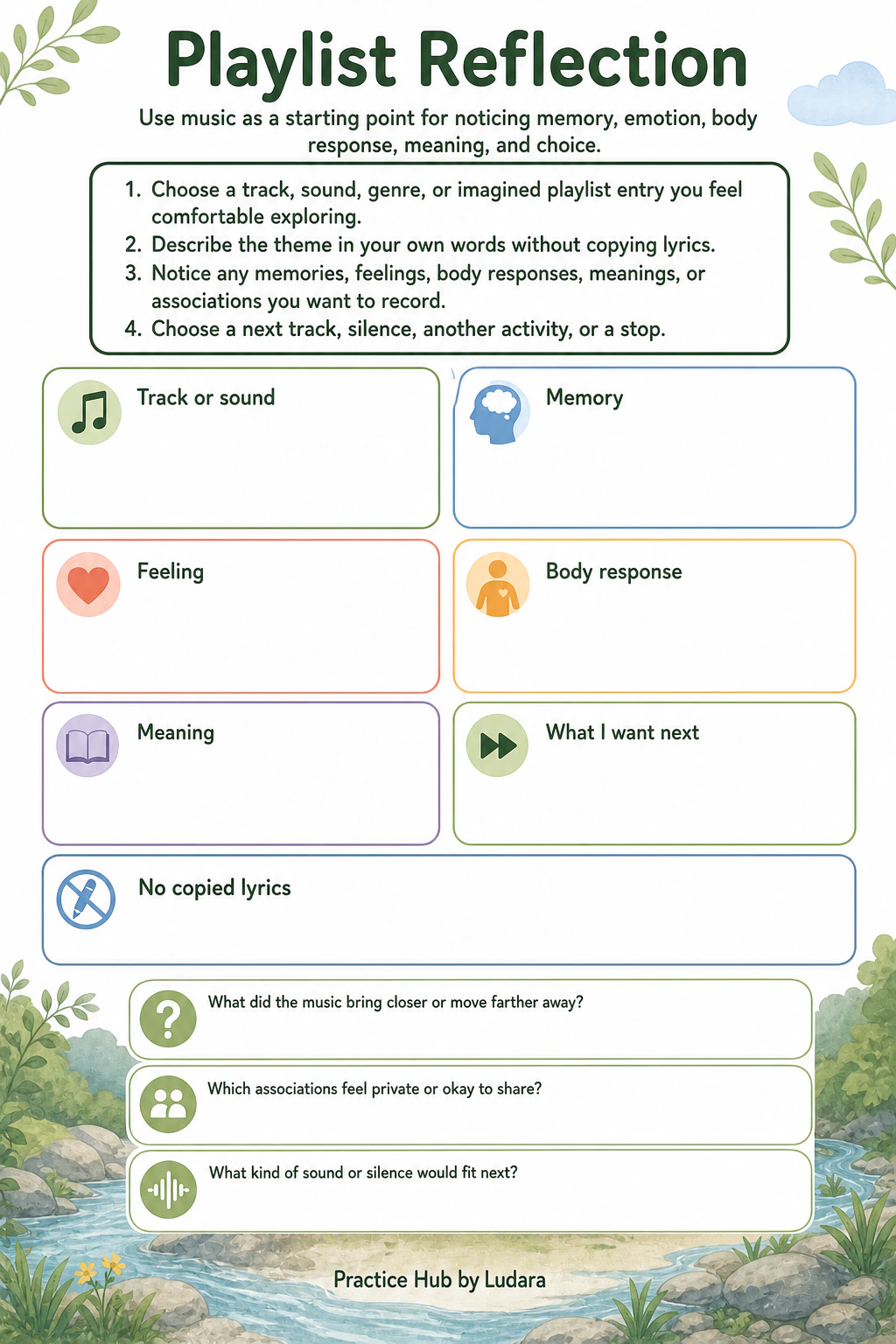
Start with a song, sound, or playlist. Talk about any memories, feelings, body responses, or meanings it brings up, and what you want to do next.
For clinician-facilitated use
This is a professional resource, not a child-facing online service. A licensed clinician or other qualified adult must determine suitability, explain and adapt the activity, and supervise its use. Do not direct a child to access this webpage independently or enter client information.
An adult professional should download the full-resolution WebP, which includes margins for printing. Read the guidance below before using it.
How to use it
- Choose a track, sound, genre, or imagined playlist entry you feel comfortable exploring.
- Describe the theme in your own words without copying lyrics.
- Notice any memories, feelings, body responses, meanings, or associations you want to record.
- Choose a next track, silence, another activity, or a stop.
Questions to explore
- What did the music bring closer or move farther away?
- Which associations feel private or okay to share?
- What kind of sound or silence would fit next?

Notes for the person facilitating
Do not request or reproduce copyrighted lyrics. Confirm group privacy expectations while being clear about their limits, and allow headphones, silence, or a non-music alternative.
Ways to adapt the activity
- Use instrumental music, environmental sound, or silence.
- Draw color, shape, or movement instead of writing.
- Discuss a fictional soundtrack rather than a personally meaningful track.
Professional use and fit
Before using this resource, a licensed clinician or other qualified adult should decide whether it fits the person, setting, goals, accessibility needs, and applicable local policies.