Teen-Focused Resources · TE-05
Relationship Pattern Cards
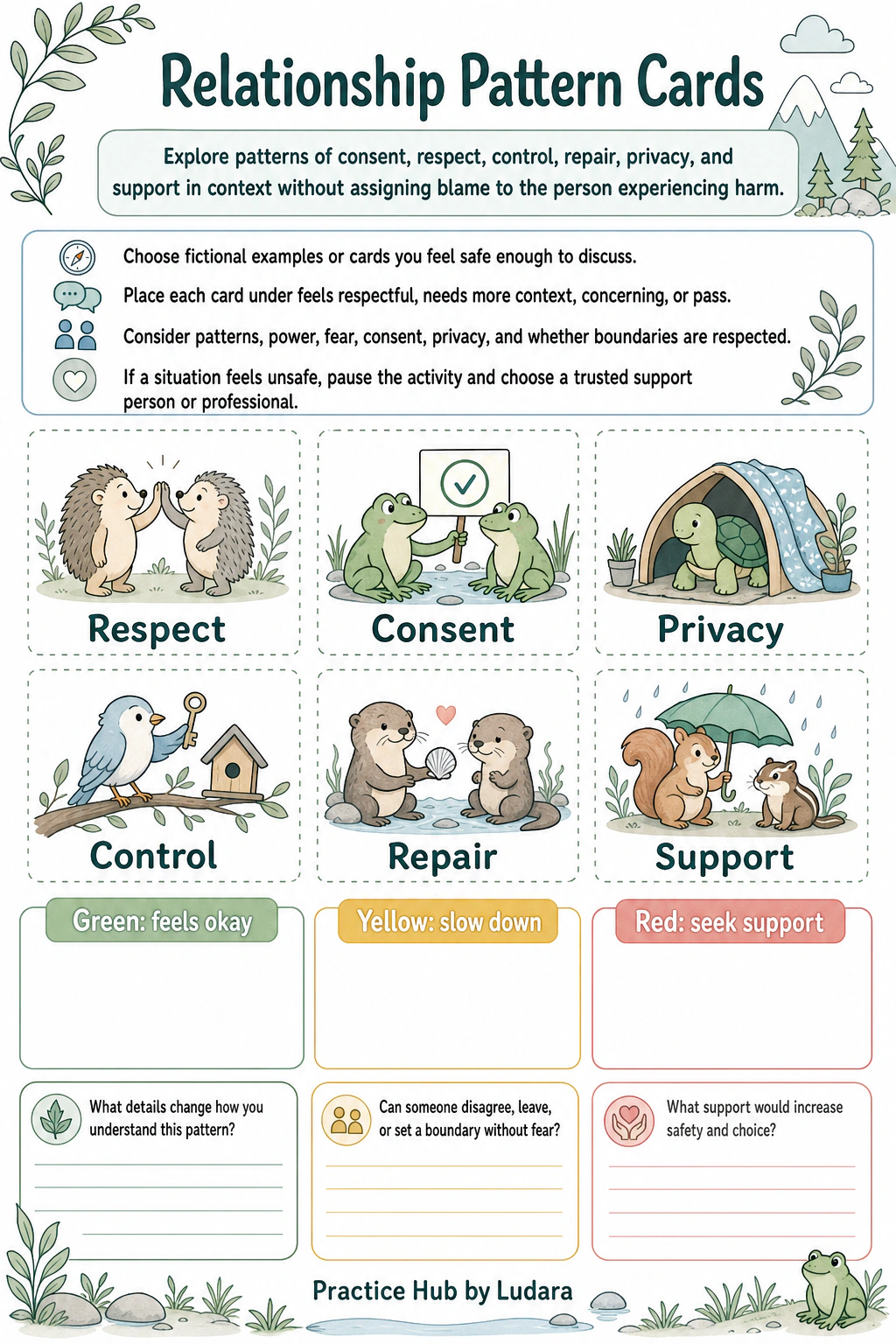
Explore patterns of consent, respect, control, repair, privacy, and support in context without assigning blame to the person experiencing harm.
Clinician-created · specialist review requiredFor clinician-facilitated use
This is a professional resource, not a child-facing online service. A licensed clinician or other qualified adult must determine suitability, explain and adapt the activity, and supervise its use. Do not direct a child to access this webpage independently or enter client information.
The full-resolution WebP includes print-safe margins and should be downloaded by an adult professional. Read the guidance below before using the page.
How to use it
- Choose fictional examples or cards you feel safe enough to discuss.
- Place each card under feels respectful, needs more context, concerning, or pass.
- Consider patterns, power, fear, consent, privacy, and whether boundaries are respected.
- If a situation feels unsafe, pause the activity and choose a trusted support person or professional.

Reflection prompts
- What details change how you understand this pattern?
- Can someone disagree, leave, or set a boundary without fear?
- What support would increase safety and choice?

Facilitator guidance
Use only with dating-violence-informed practice. Avoid mutualizing abuse, directing confrontation, or treating color categories as proof. Respond to disclosures through established safeguarding, confidentiality, documentation, and referral procedures.
Adaptations & accessibility
- Use fictional or media-based scenarios before personal material.
- Allow private sorting without explanation.
- Provide non-dating friendship, family, and online-context versions.
Professional-use review
Dating-violence specialist, licensed-clinician, legal, privacy, and safeguarding review required; the practice must add current local help-seeking resources and procedures.