Play Therapy · PT-10
Choice-Based Session Badges
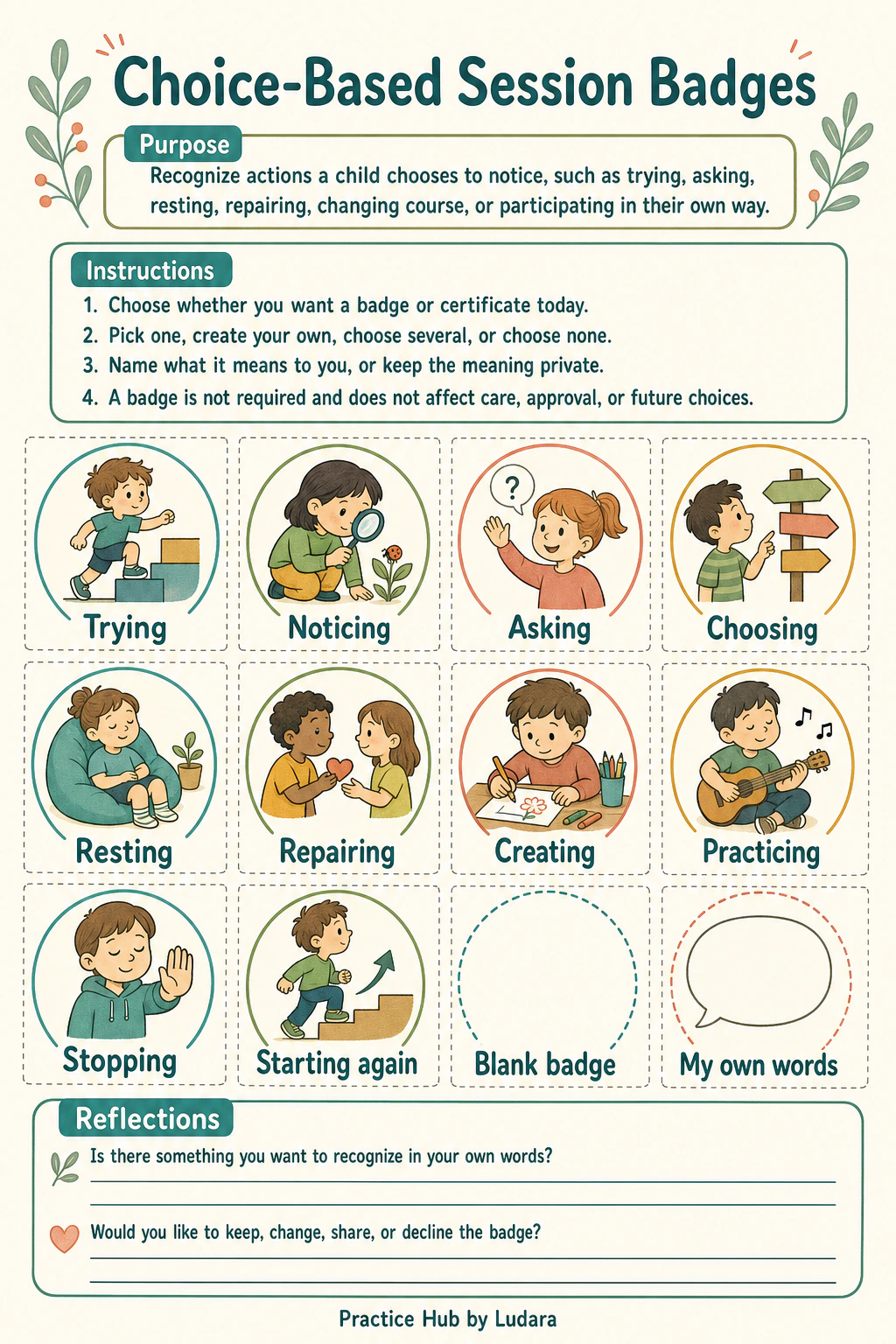
Recognize actions a child chooses to notice, such as trying, asking, resting, repairing, changing course, or participating in their own way.
Clinician-created · facilitator review requiredFor clinician-facilitated use
This is a professional resource, not a child-facing online service. A licensed clinician or other qualified adult must determine suitability, explain and adapt the activity, and supervise its use. Do not direct a child to access this webpage independently or enter client information.
The full-resolution WebP includes print-safe margins and should be downloaded by an adult professional. Read the guidance below before using the page.
How to use it
- Choose whether you want a badge or certificate today.
- Pick one, create your own, choose several, or choose none.
- Name what it means to you, or keep the meaning private.
- A badge is not required and does not affect care, approval, or future choices.

Reflection prompts
- Is there something you want to recognize in your own words?
- Would you like to keep, change, share, or decline the badge?

Facilitator guidance
Offer recognition without ranking, public display, token economies, or contingent access. Never reward disclosure, agreement, eye contact, stillness, symptom absence, confidentiality breaches, or compliance; ensure declining a badge carries no consequence.
Adaptations & accessibility
- Use blank badges, private notes, digital icons, verbal acknowledgment, or no artifact.
- Let the child choose wording, pronouns, imagery, visibility, and storage.
- Recognize rest, boundary-setting, asking for help, changing one's mind, and stopping.
Professional-use review
Licensed play-therapy and ethics review required before use; badges must remain optional recognition rather than compliance rewards, competition, behavior control, or incentives for disclosure.