Play Therapy · PT-02
Story-Making Picture Cards
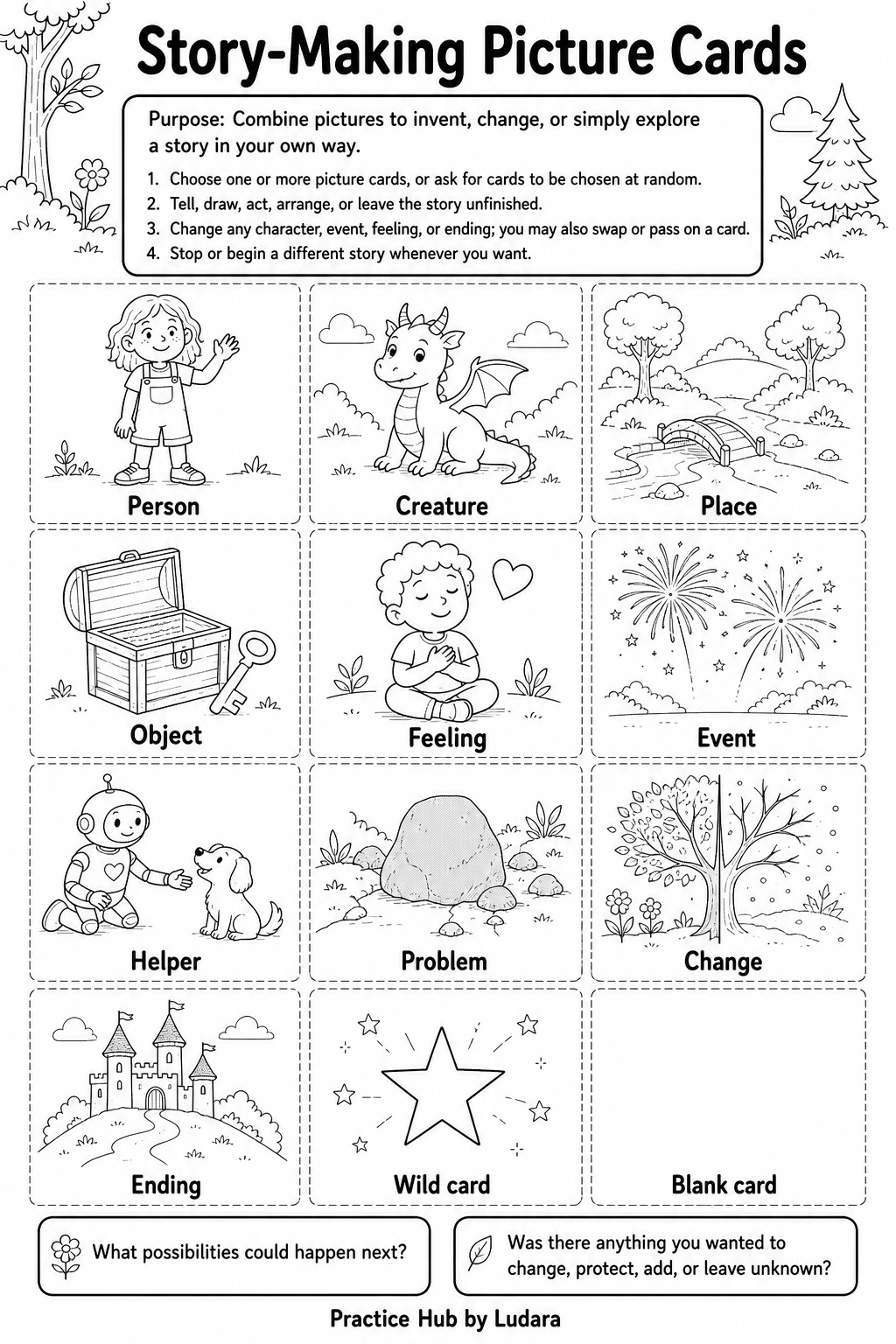
Combine pictures to invent, change, or simply explore a story in your own way.
Clinician-created · facilitator review requiredFor clinician-facilitated use
This is a professional resource, not a child-facing online service. A licensed clinician or other qualified adult must determine suitability, explain and adapt the activity, and supervise its use. Do not direct a child to access this webpage independently or enter client information.
The full-resolution WebP includes print-safe margins and should be downloaded by an adult professional. Read the guidance below before using the page.
How to use it
- Choose one or more picture cards, or ask for cards to be chosen at random.
- Tell, draw, act, arrange, or leave the story unfinished.
- Change any character, event, feeling, or ending; you may also swap or pass on a card.
- Stop or begin a different story whenever you want.

Reflection prompts
- What possibilities could happen next?
- Was there anything you wanted to change, protect, add, or leave unknown?

Facilitator guidance
Follow the child's lead and describe observable play without assigning hidden meaning. A character, object, sequence, or theme is not evidence of biography, trauma, intent, or diagnosis; seek clarification only through open, non-leading invitations.
Adaptations & accessibility
- Offer a smaller card set, visual choice board, or single-card story.
- Allow nonverbal sequencing, AAC, drawing, puppet play, or collaborative narration.
- Include blank cards and culturally relevant images selected with the child.
Professional-use review
Licensed play-therapy and cultural-responsiveness review required before use; symbolic choices must not be over-interpreted or treated as disclosure without independent assessment.