Play Therapy · PT-05
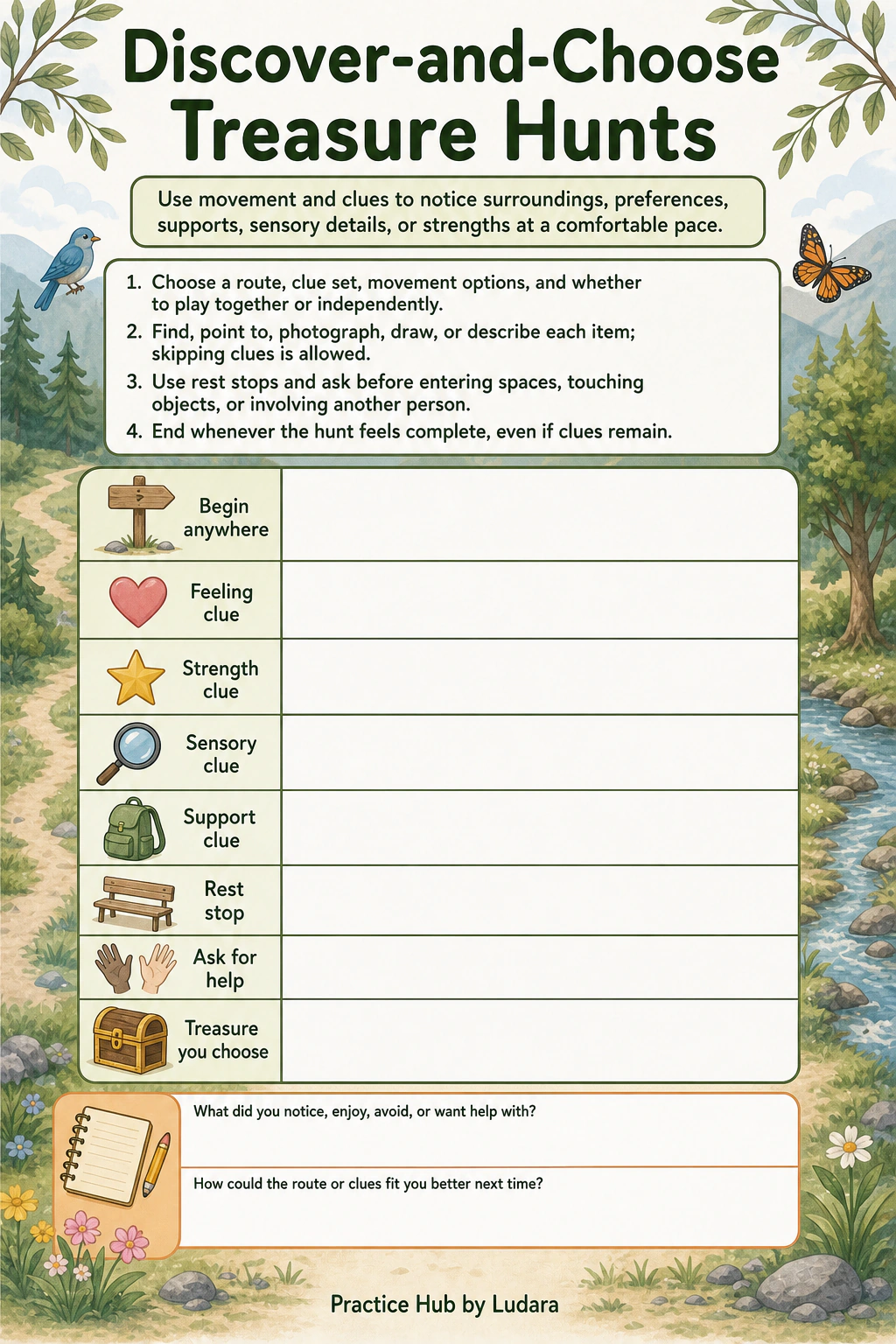
Discover-and-Choose Treasure Hunts
Use movement and clues to notice surroundings, preferences, supports, sensory details, or strengths at a comfortable pace.
Clinician-created · facilitator review requiredFor clinician-facilitated use
This is a professional resource, not a child-facing online service. A licensed clinician or other qualified adult must determine suitability, explain and adapt the activity, and supervise its use. Do not direct a child to access this webpage independently or enter client information.
The full-resolution WebP includes print-safe margins and should be downloaded by an adult professional. Read the guidance below before using the page.
How to use it
- Choose a route, clue set, movement options, and whether to play together or independently.
- Find, point to, photograph, draw, or describe each item; skipping clues is allowed.
- Use rest stops and ask before entering spaces, touching objects, or involving another person.
- End whenever the hunt feels complete, even if clues remain.

Reflection prompts
- What did you notice, enjoy, avoid, or want help with?
- How could the route or clues fit you better next time?

Facilitator guidance
Precheck the route for privacy, elopement, traffic, stairs, allergens, sensory load, physical hazards, and restricted areas. Keep play noncompetitive by default and never hide prompts that solicit private disclosure or require contact without consent.
Adaptations & accessibility
- Use a seated, tabletop, visual-search, photo, or virtual hunt.
- Offer mobility-accessible routes, sensory alternatives, and partner support.
- Replace speed or quantity goals with a shared choose-when-finished goal.
Professional-use review
Licensed play-therapy, accessibility, privacy, and physical-safety review required before use; remove competition, surveillance, forced disclosure, and inaccessible or unsupervised routes.