Couples & Family · CF-06
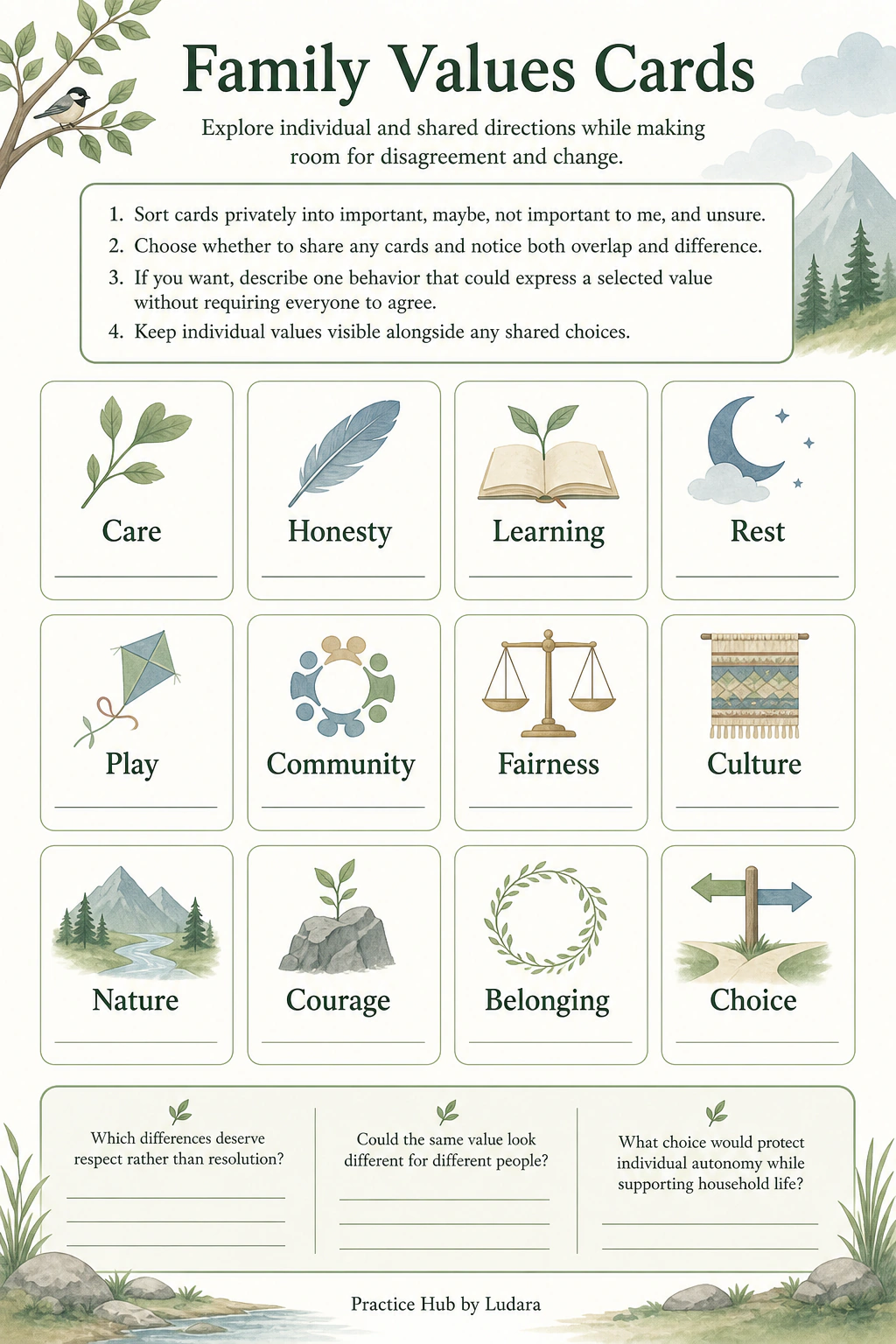
Family Values Cards
Compare the values that matter to each person, with room for shared choices, differences, and changing minds.
For clinician-facilitated use
This is a professional resource, not a child-facing online service. A licensed clinician or other qualified adult must determine suitability, explain and adapt the activity, and supervise its use. Do not direct a child to access this webpage independently or enter client information.
An adult professional should download the full-resolution WebP, which includes margins for printing. Read the guidance below before using it.
How to use it
- Sort cards privately into important, maybe, not important to me, and unsure.
- Choose whether to share any cards and notice both overlap and difference.
- If you want, name one action that could reflect a value you chose. You don’t all have to agree.
- Keep individual values visible alongside any shared choices.

Questions to explore
- Which differences deserve respect rather than resolution?
- Could the same value look different for different people?
- What choice would protect individual autonomy while supporting household life?

Notes for the person facilitating
Prevent majority rule, parent-led correction, or pressure to endorse a shared identity. Values are directions, not tests of loyalty, morality, or family membership.
Ways to adapt the activity
- Allow private sorting with only optional summary sharing.
- Use images, examples, translation, or AAC alongside abstract value words.
- Reduce the deck and add blank cards for culturally or personally important values.
Professional use and fit
Before using this resource, a licensed clinician or other qualified adult should decide whether it fits the person, setting, goals, accessibility needs, and applicable local policies.