Couples & Family · CF-03
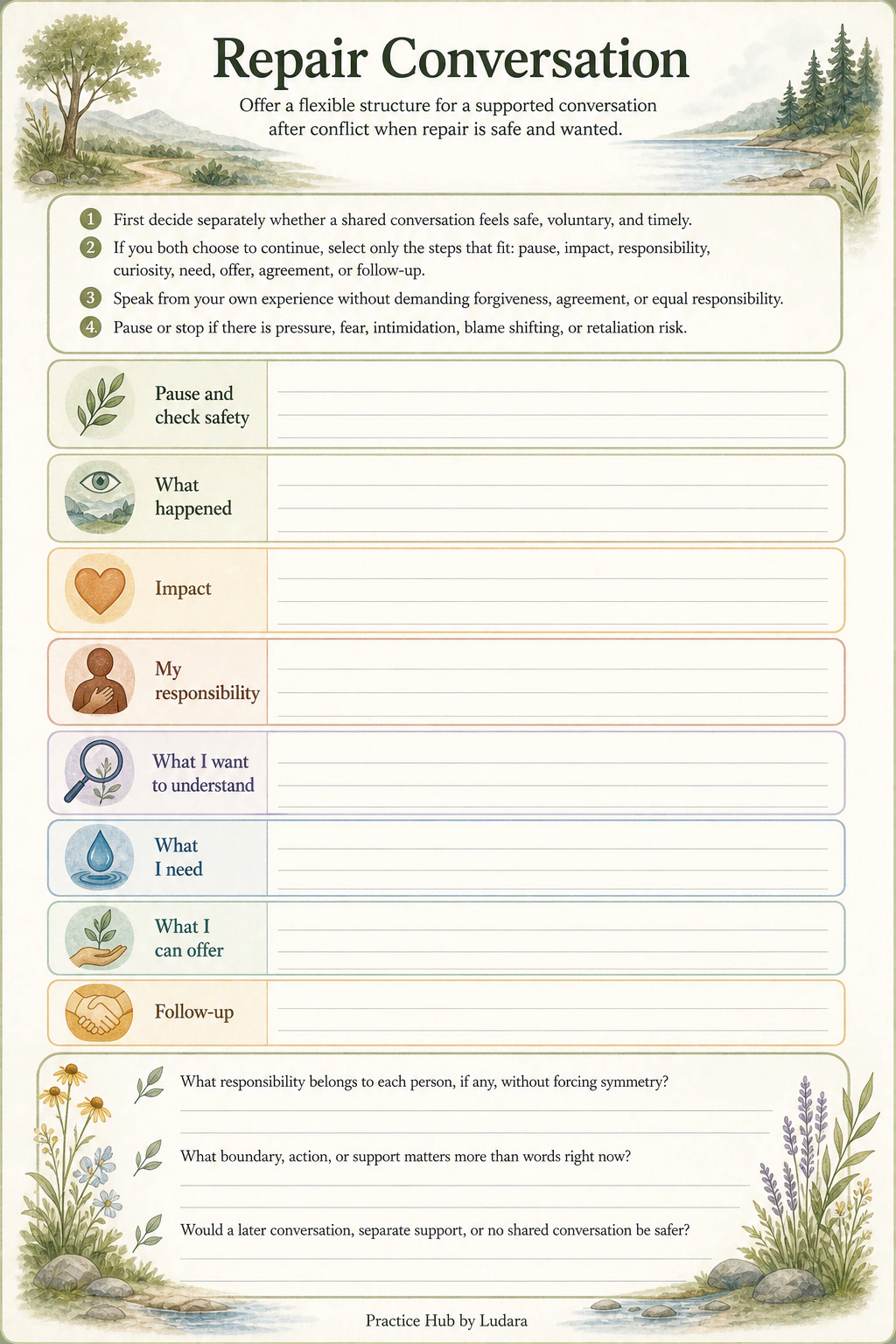
Repair Conversation
Offer a flexible structure for a supported conversation after conflict when repair is safe and wanted.
Specialist review required Couples and families
 20-40 minutes
 Guided worksheet
 Complete page
 View collection
Full-resolution WebP artwork with print-safe margins. Review the guidance below before use.
How to use it
- First decide separately whether a shared conversation feels safe, voluntary, and timely.
- If you both choose to continue, select only the steps that fit: pause, impact, responsibility, curiosity, need, offer, agreement, or follow-up.
- Speak from your own experience without demanding forgiveness, agreement, or equal responsibility.
- Pause or stop if there is pressure, fear, intimidation, blame shifting, or retaliation risk.

Reflection prompts
- What responsibility belongs to each person, if any, without forcing symmetry?
- What boundary, action, or support matters more than words right now?
- Would a later conversation, separate support, or no shared conversation be safer?

Facilitator guidance
Use only after screening for abuse, coercive control, intimidation, and retaliation. A script cannot create safety, substitute for accountability, or make a mutual repair frame appropriate when harm and power are unequal.

Adaptations & accessibility
- Use separate written reflections that are not exchanged unless each person freely chooses.
- Complete only one step per session with a clinician controlling pace and transitions.
- Offer nonverbal, translated, AAC, or support-person-assisted formats without requiring direct assertion.

Review considerations
Enhanced couples/family abuse-safety specialist and second licensed-clinician review required before use.
This is a layout-complete draft. Complete the stated clinical, accessibility, and local-policy review before client use or publication.