CBT-Informed Activities · CB-10
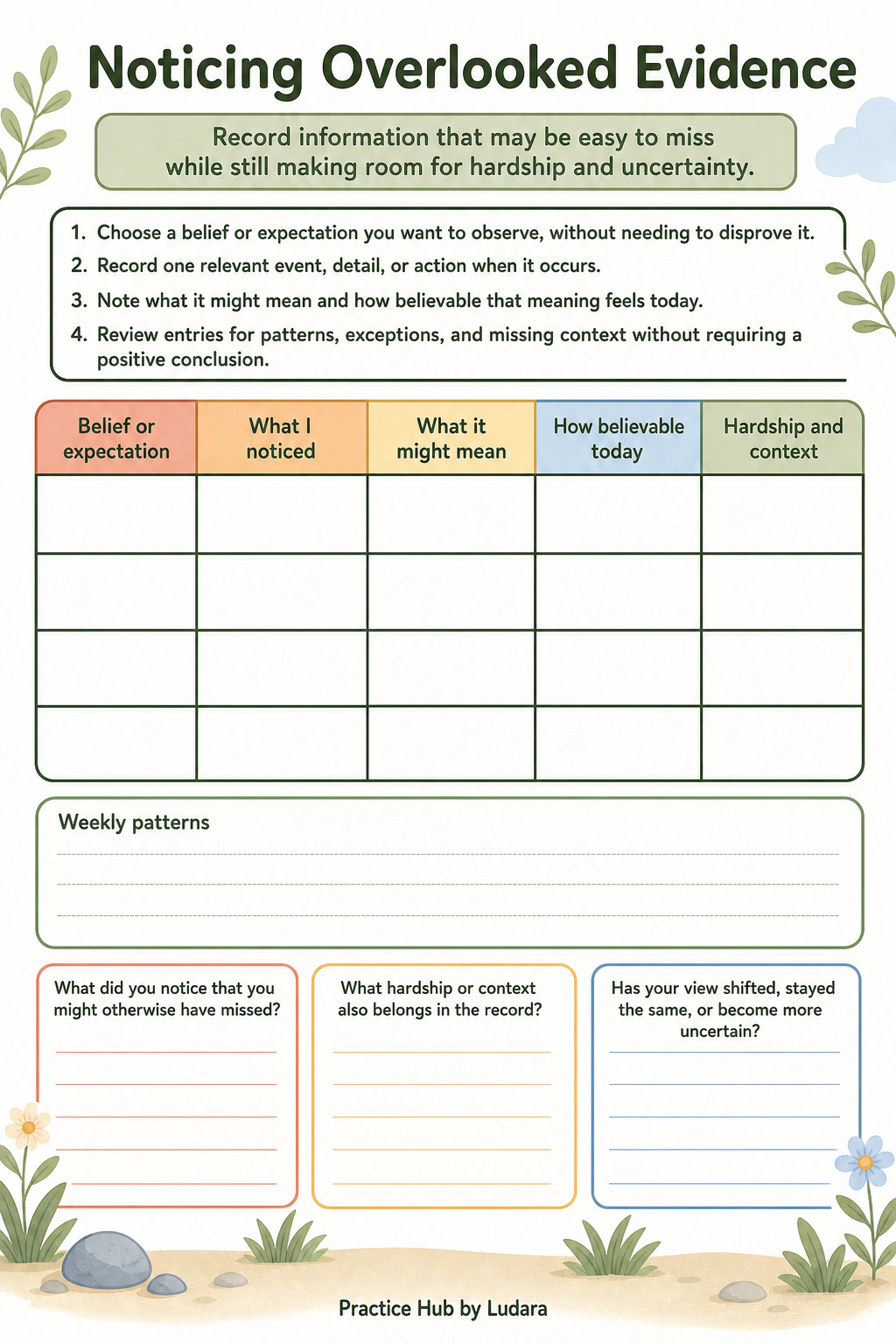
Noticing Overlooked Evidence
Keep a record of details you might otherwise miss, alongside the difficulties and unanswered questions that still matter.
For clinician-facilitated use
This is a professional resource, not a child-facing online service. A licensed clinician or other qualified adult must determine suitability, explain and adapt the activity, and supervise its use. Do not direct a child to access this webpage independently or enter client information.
An adult professional should download the full-resolution WebP, which includes margins for printing. Read the guidance below before using it.
How to use it
- Choose a belief or expectation you want to observe, without needing to disprove it.
- Record one relevant event, detail, or action when it occurs.
- Note what it might mean and how believable that meaning feels today.
- Review entries for patterns, exceptions, and missing context without requiring a positive conclusion.

Questions to explore
- What did you notice that you might otherwise have missed?
- What hardship or context also belongs in the record?
- Has your view shifted, stayed the same, or become more uncertain?

Notes for the person facilitating
Frame this as balanced observation, not gratitude practice or proof that difficulties are unreal. Accept no change, mixed evidence, and low credibility ratings as valid outcomes.
Ways to adapt the activity
- Use photos, voice notes, or objects instead of written entries.
- Track only once per week rather than daily.
- Include a parallel space for barriers, harms, or unmet needs.
Professional use and fit
Before using this resource, a licensed clinician or other qualified adult should decide whether it fits the person, setting, goals, accessibility needs, and applicable local policies.