CBT-Informed Activities · CB-02
Thought Detective
Look for clues that support a thought and clues that suggest another explanation.
For clinician-facilitated use
This is a professional resource, not a child-facing online service. A licensed clinician or other qualified adult must determine suitability, explain and adapt the activity, and supervise its use. Do not direct a child to access this webpage independently or enter client information.
An adult professional should download the full-resolution WebP, which includes margins for printing. Read the guidance below before using it.
How to use it
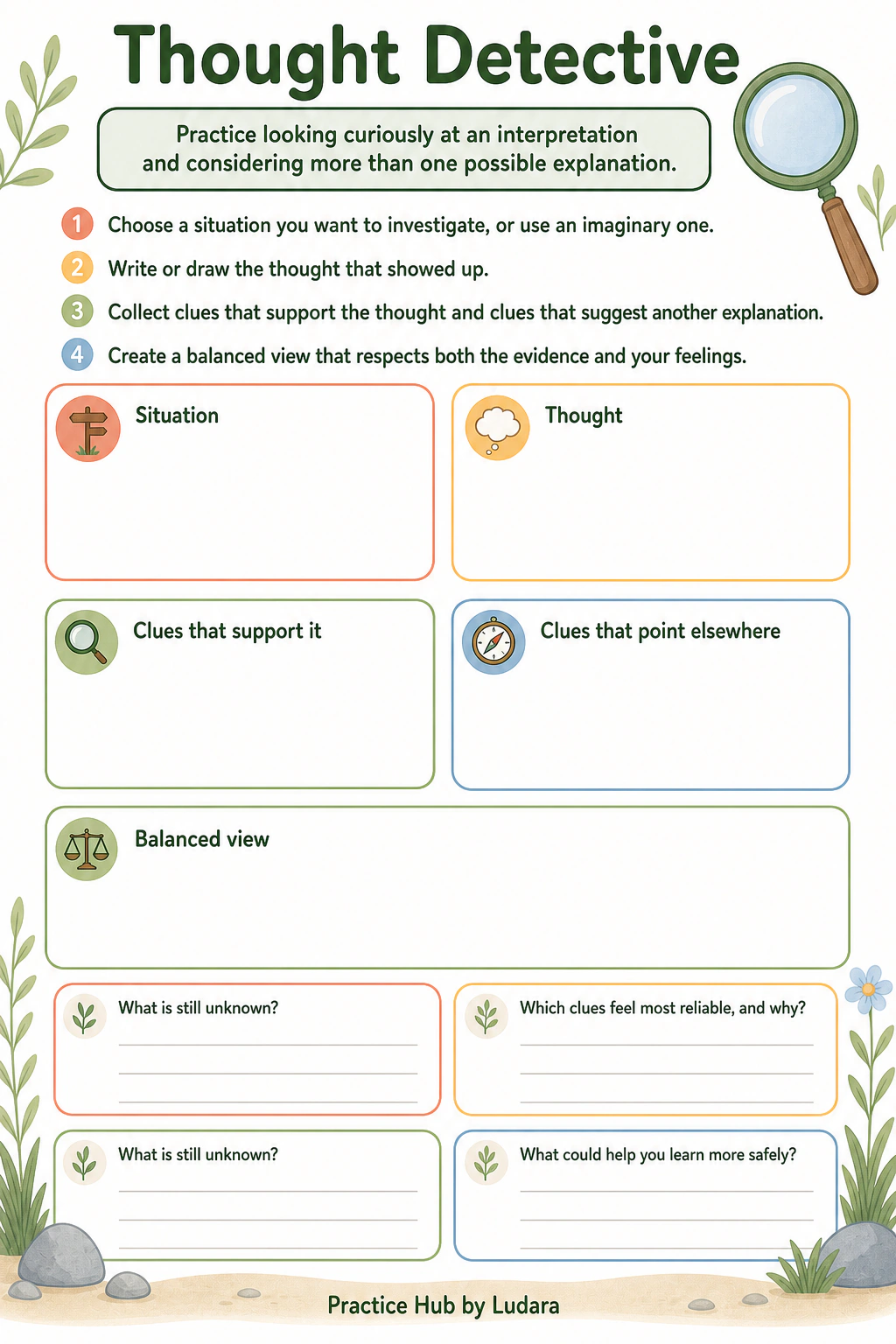
- Choose a situation you want to investigate, or use an imaginary one.
- Write or draw the thought that showed up.
- Collect clues that support the thought and clues that suggest another explanation.
- Create a balanced view that respects both the evidence and your feelings.

Questions to explore
- Which clues feel most reliable, and why?
- What is still unknown?
- What could help you learn more safely?

Notes for the person facilitating
Model curiosity without cross-examining the client. Emotions are meaningful experiences, not evidence errors. Do not use this activity to dispute reports of harm, discrimination, or danger.
Ways to adapt the activity
- Use picture clues or movable objects.
- Offer two fictional examples to choose from.
- Let the client dictate while the facilitator writes exactly what is said.
Professional use and fit
Before using this resource, a licensed clinician or other qualified adult should decide whether it fits the person, setting, goals, accessibility needs, and applicable local policies.