CBT-Informed Activities · CB-09
Activity and Energy Planner
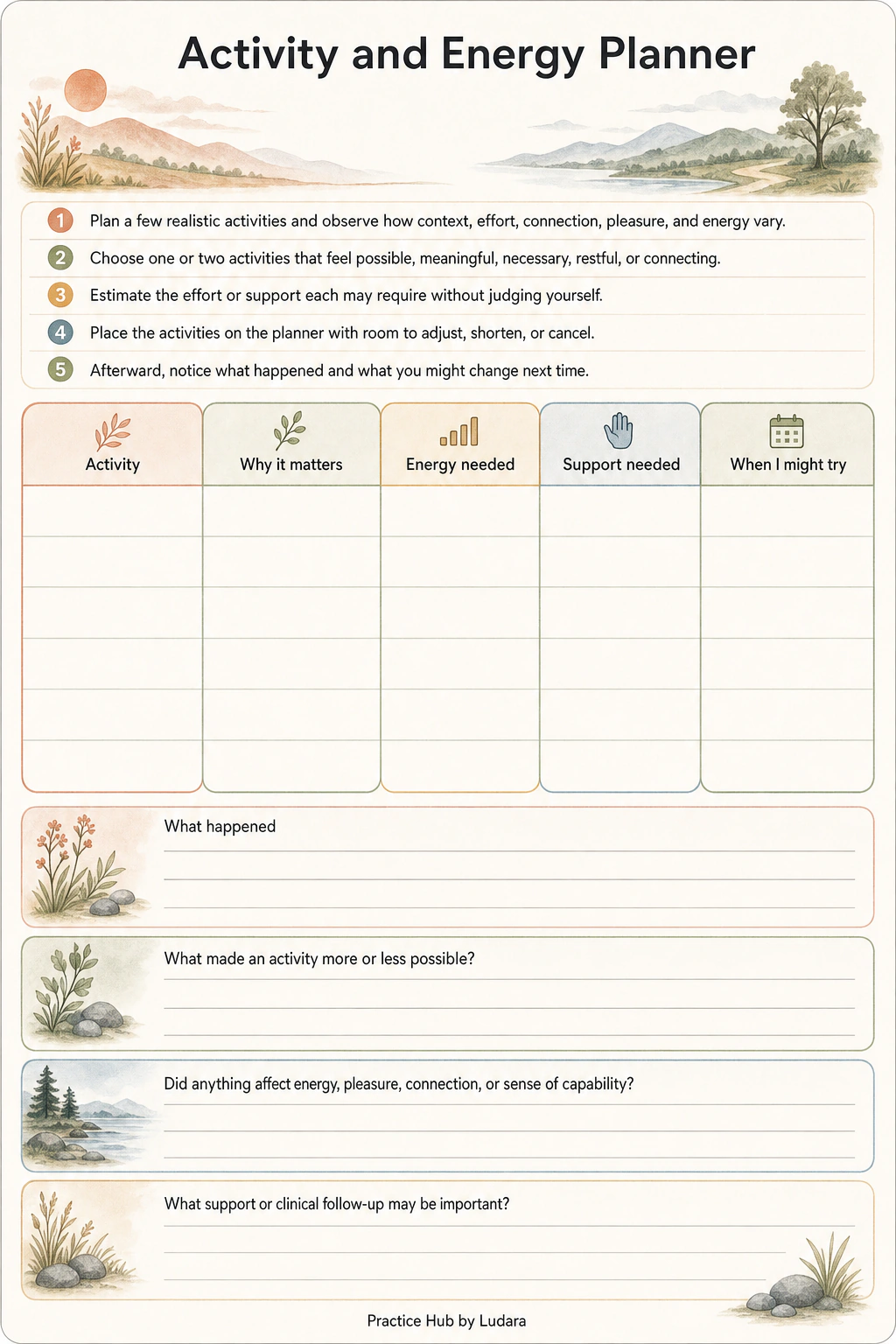
Plan a few activities that feel possible, then notice how effort, energy, pleasure, connection, and circumstances shape the experience.
For clinician-facilitated use
This is a professional resource, not a child-facing online service. A licensed clinician or other qualified adult must determine suitability, explain and adapt the activity, and supervise its use. Do not direct a child to access this webpage independently or enter client information.
An adult professional should download the full-resolution WebP, which includes margins for printing. Read the guidance below before using it.
How to use it
- Choose one or two activities that feel possible, meaningful, necessary, restful, or connecting.
- Consider how much effort or support each activity might need, without judging yourself for the answer.
- Place the activities on the planner with room to adjust, shorten, or cancel.
- Afterward, notice what happened and what you might change next time.

Questions to explore
- What made an activity more or less possible?
- Did anything affect energy, pleasure, connection, or sense of capability?
- What support or clinical follow-up may be important?

Notes for the person facilitating
Use collaboratively and cautiously when low mood, depression, exhaustion, disability, or major stress is present. Avoid productivity framing and assess safety through appropriate clinical processes rather than this worksheet.
Ways to adapt the activity
- Plan rest, care tasks, and asking for help as valid activities.
- Use an energy budget or flexible time window instead of a fixed schedule.
- Complete verbally or with a support person when initiation or writing is difficult.
Professional use and fit
Before using this resource, a licensed clinician or other qualified adult should decide whether it fits the person, setting, goals, accessibility needs, and applicable local policies.