CBT-Informed Activities · CB-05
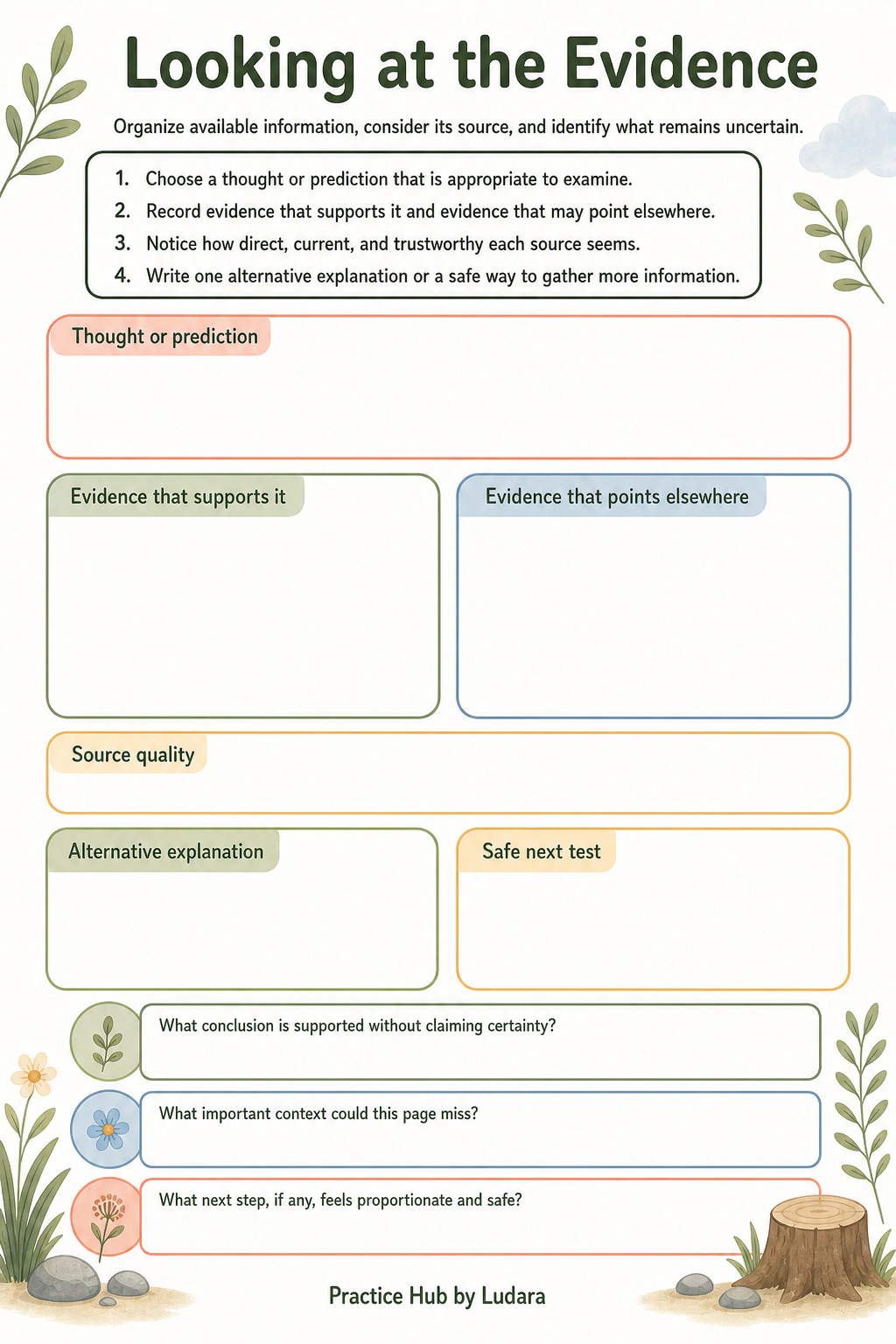
Looking at the Evidence
Lay out the information you have, where it came from, and what you still do not know.
For clinician-facilitated use
This is a professional resource, not a child-facing online service. A licensed clinician or other qualified adult must determine suitability, explain and adapt the activity, and supervise its use. Do not direct a child to access this webpage independently or enter client information.
An adult professional should download the full-resolution WebP, which includes margins for printing. Read the guidance below before using it.
How to use it
- Choose a thought or prediction that is appropriate to examine.
- Record evidence that supports it and evidence that may point elsewhere.
- Notice how direct, current, and trustworthy each source seems.
- Write one alternative explanation or a safe way to gather more information.

Questions to explore
- What conclusion is supported without claiming certainty?
- What important context could this page miss?
- What next step, if any, feels proportionate and safe?

Notes for the person facilitating
Use only for interpretations that can appropriately be examined. Do not use it to challenge lived discrimination, abuse, coercion, medical symptoms, or confirmed danger.
Ways to adapt the activity
- Use objects on a physical balance instead of writing.
- Mark each item as direct observation, report, memory, or inference.
- Stop after listing information without requiring a new conclusion.
Professional use and fit
Before using this resource, a licensed clinician or other qualified adult should decide whether it fits the person, setting, goals, accessibility needs, and applicable local policies.