Trauma-Informed Resources · TI-06
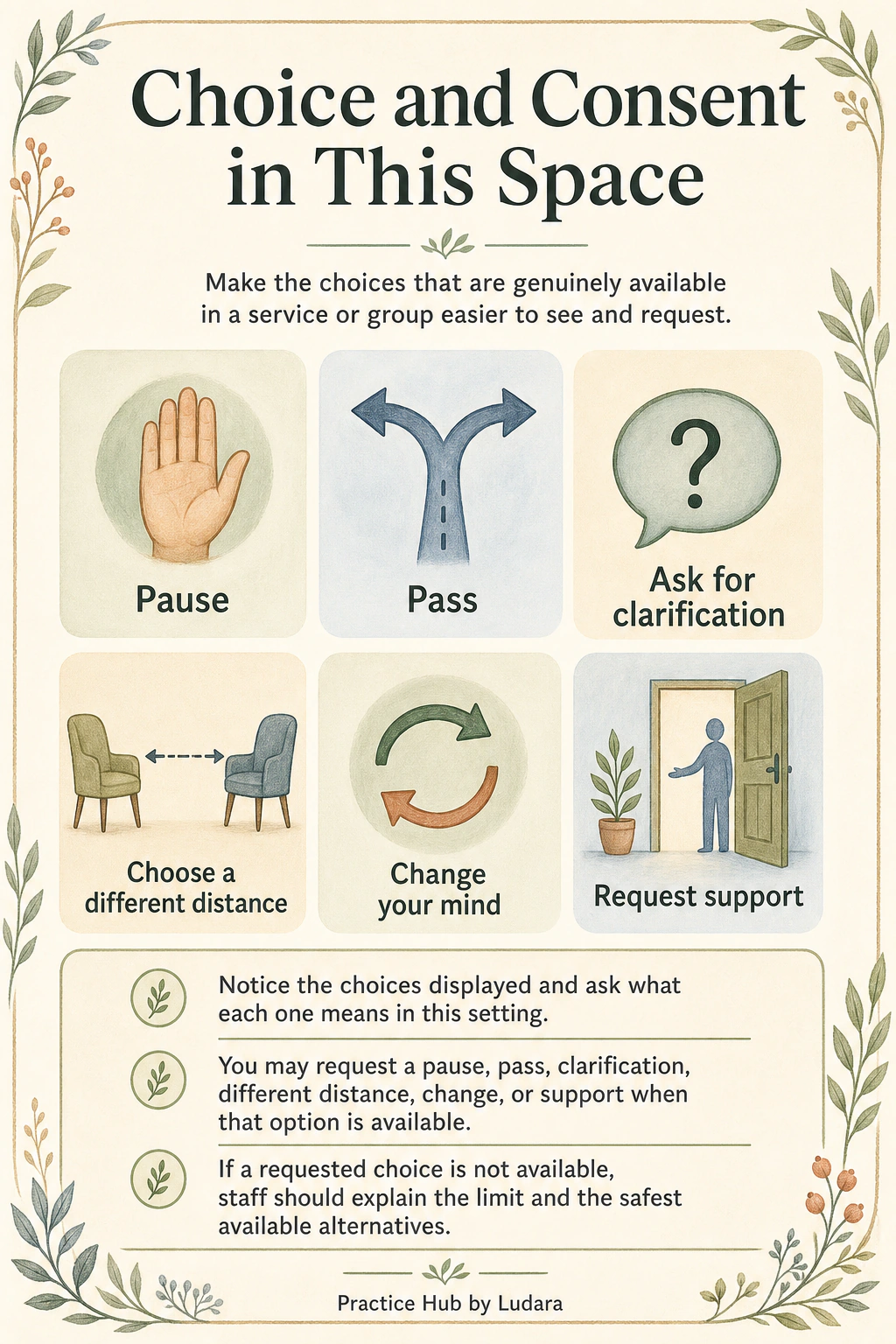
Choice and Consent in This Space
Make the choices that are genuinely available in a service or group easier to see and request.
Clinician-created · specialist review requiredFor clinician-facilitated use
This is a professional resource, not a child-facing online service. A licensed clinician or other qualified adult must determine suitability, explain and adapt the activity, and supervise its use. Do not direct a child to access this webpage independently or enter client information.
The full-resolution WebP includes print-safe margins and should be downloaded by an adult professional. Read the guidance below before using the page.
How to use it
- Notice the choices displayed and ask what each one means in this setting.
- You may request a pause, pass, clarification, different distance, change, or support when that option is available.
- If a requested choice is not available, staff should explain the limit and the safest available alternatives.

Reflection prompts
- Which choices are important for you to know about before beginning?
- How would you prefer to signal pause, pass, or support?

Facilitator guidance
Display only choices the setting can reliably honor. During orientation, explain limits, confidentiality, mandatory actions, and alternatives in plain language; establish accessible signals and respond consistently without punishing a person for using them.
Adaptations & accessibility
- Provide translated, symbol-supported, large-print, tactile, and AAC-compatible versions.
- Create discreet pause or support signals.
- Adapt seating, sensory conditions, distance, and communication methods where feasible.
Professional-use review
Enhanced licensed trauma-specialist, safeguarding, accessibility, and local-policy review required before use. The poster must match actual practice and must not promise autonomy, confidentiality, or options the setting cannot provide.