Trauma-Informed Resources · TI-03
Trauma-Sensitive Grounding Choices
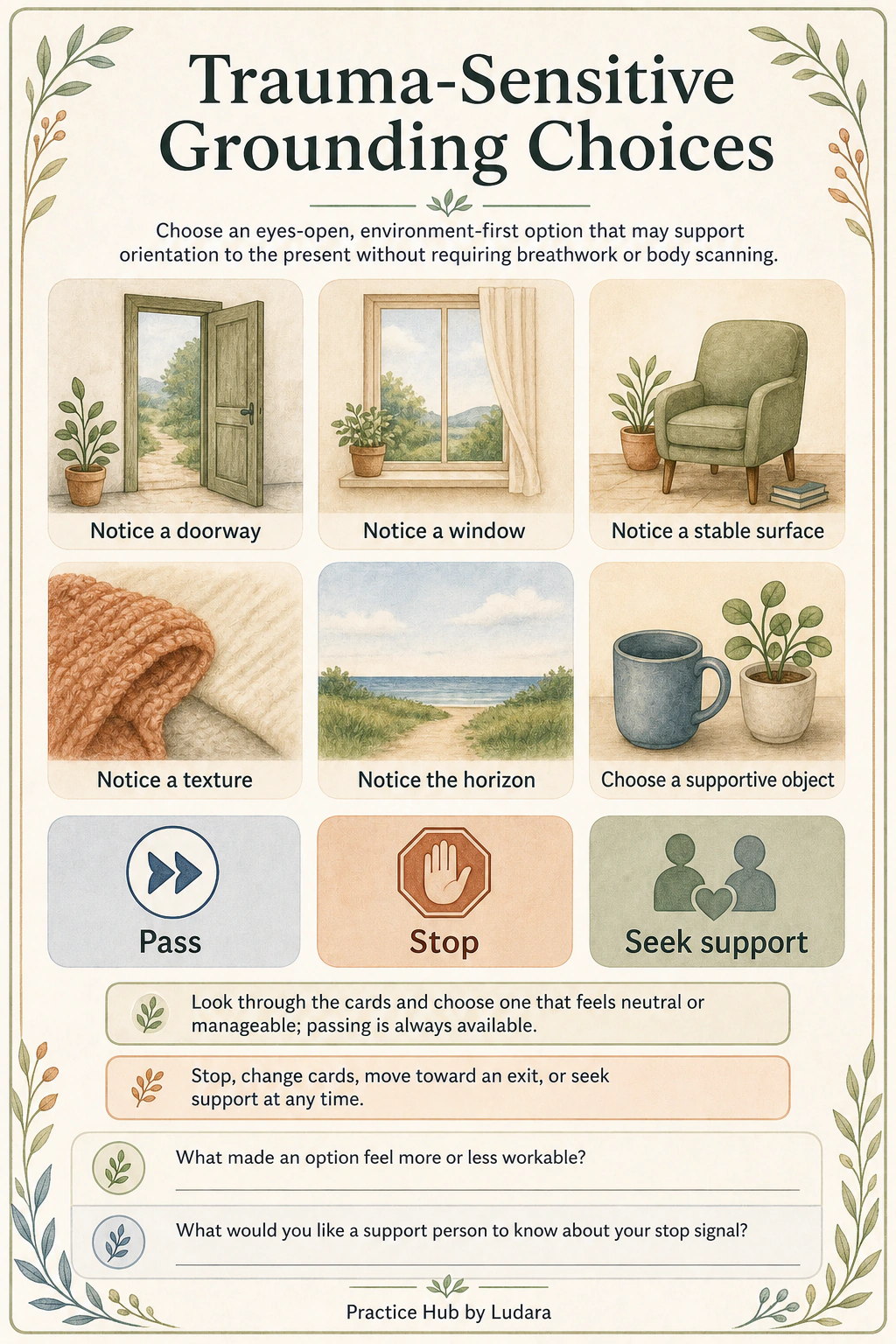
Choose an eyes-open, environment-first option that may support orientation to the present without requiring breathwork or body scanning.
Clinician-created · specialist review requiredFor clinician-facilitated use
This is a professional resource, not a child-facing online service. A licensed clinician or other qualified adult must determine suitability, explain and adapt the activity, and supervise its use. Do not direct a child to access this webpage independently or enter client information.
The full-resolution WebP includes print-safe margins and should be downloaded by an adult professional. Read the guidance below before using the page.
How to use it
- Look through the cards and choose one that feels neutral or manageable; passing is always available.
- Try it briefly while keeping your preferred distance, posture, and view of the room.
- Notice whether it is neutral, useful, unhelpful, or activating.
- Stop, change cards, move toward an exit, or seek support at any time.

Reflection prompts
- What made an option feel more or less workable?
- What would you like a support person to know about your stop signal?

Facilitator guidance
Offer rather than direct. Begin with environmental orientation and stable external objects; do not surprise the participant, block exits, require closed eyes, insist on breathing, or interpret a lack of benefit as resistance.
Adaptations & accessibility
- Use only visual cards and no spoken prompts.
- Adjust lighting, distance, sound, texture, or movement demands.
- Create personalized cards for known neutral objects and explicit stop choices.
Professional-use review
Enhanced licensed trauma-specialist review required before use; test every prompt for dissociation, sensory triggers, coercion, accessibility, and environmental safety.