Trauma-Informed Resources · TI-01
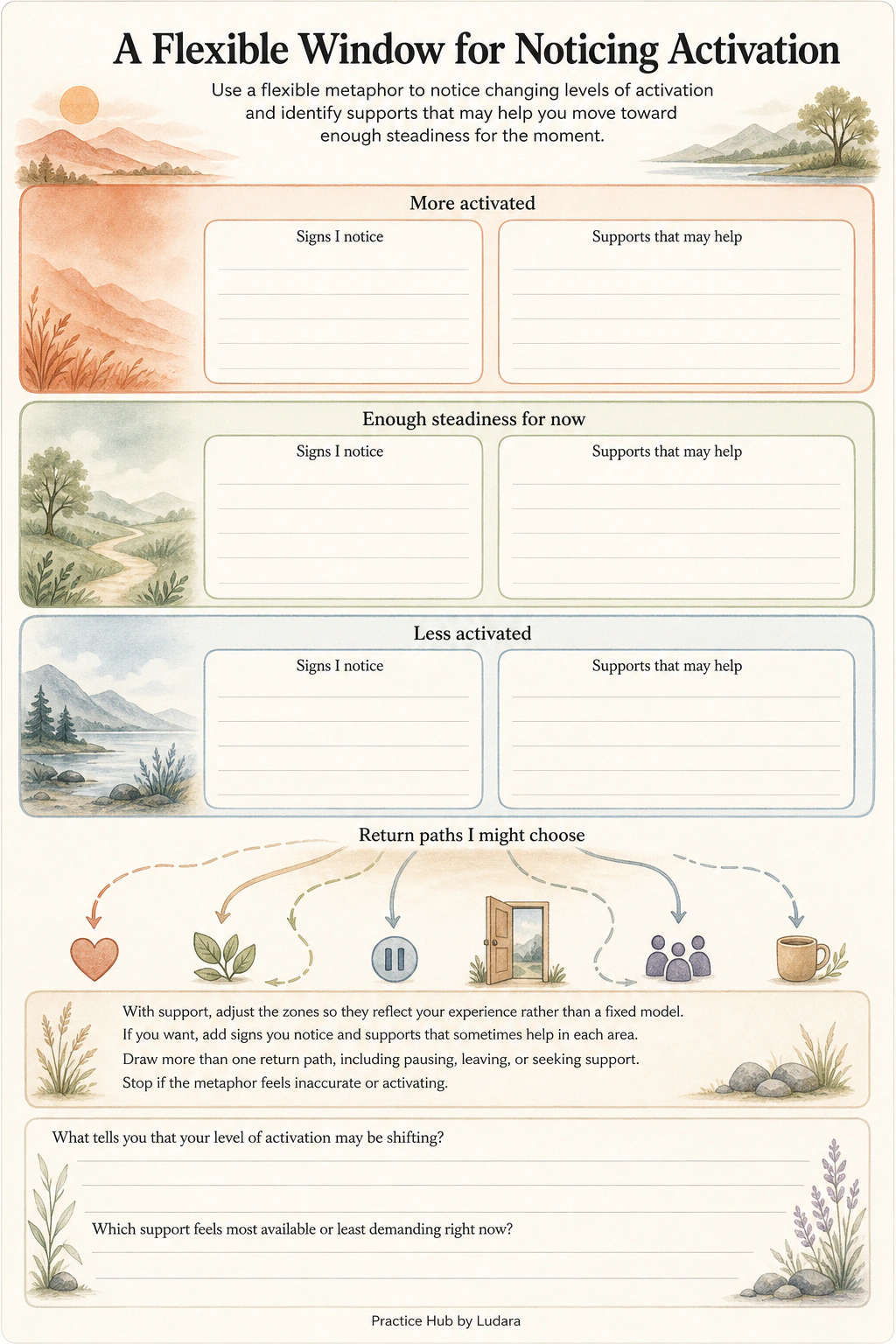
A Flexible Window for Noticing Activation
Use the window as a starting point to describe changes in your level of activation. Adjust it to fit your experience and note support that may help you feel steady enough for now.
For clinician-facilitated use
This is a professional resource, not a child-facing online service. A licensed clinician or other qualified adult must determine suitability, explain and adapt the activity, and supervise its use. Do not direct a child to access this webpage independently or enter client information.
An adult professional should download the full-resolution WebP, which includes margins for printing. Read the guidance below before using it.
How to use it
- With support, adjust the zones so they reflect your experience rather than a fixed model.
- If you want, add signs you notice and supports that sometimes help in each area.
- Draw more than one return path, including pausing, leaving, or seeking support.
- Stop if the metaphor feels inaccurate or activating.

Questions to explore
- What tells you that your level of activation may be shifting?
- Which support feels most available or least demanding right now?

Notes for the person facilitating
Present the window as an optional, changeable metaphor rather than a diagnosis, target state, or measure of success. Collaboratively define language, validate protective responses, and prioritize present-moment safety over completing the page.
Ways to adapt the activity
- Rename, resize, add, or remove zones.
- Use colors, objects, gestures, or AAC instead of body-language labels.
- Complete only the supports section or use a separate blank page.
Professional use and fit
Before using this resource, a licensed clinician or other qualified adult should decide whether it fits the person, setting, goals, accessibility needs, and applicable local policies.