Trauma-Informed Resources · TI-04
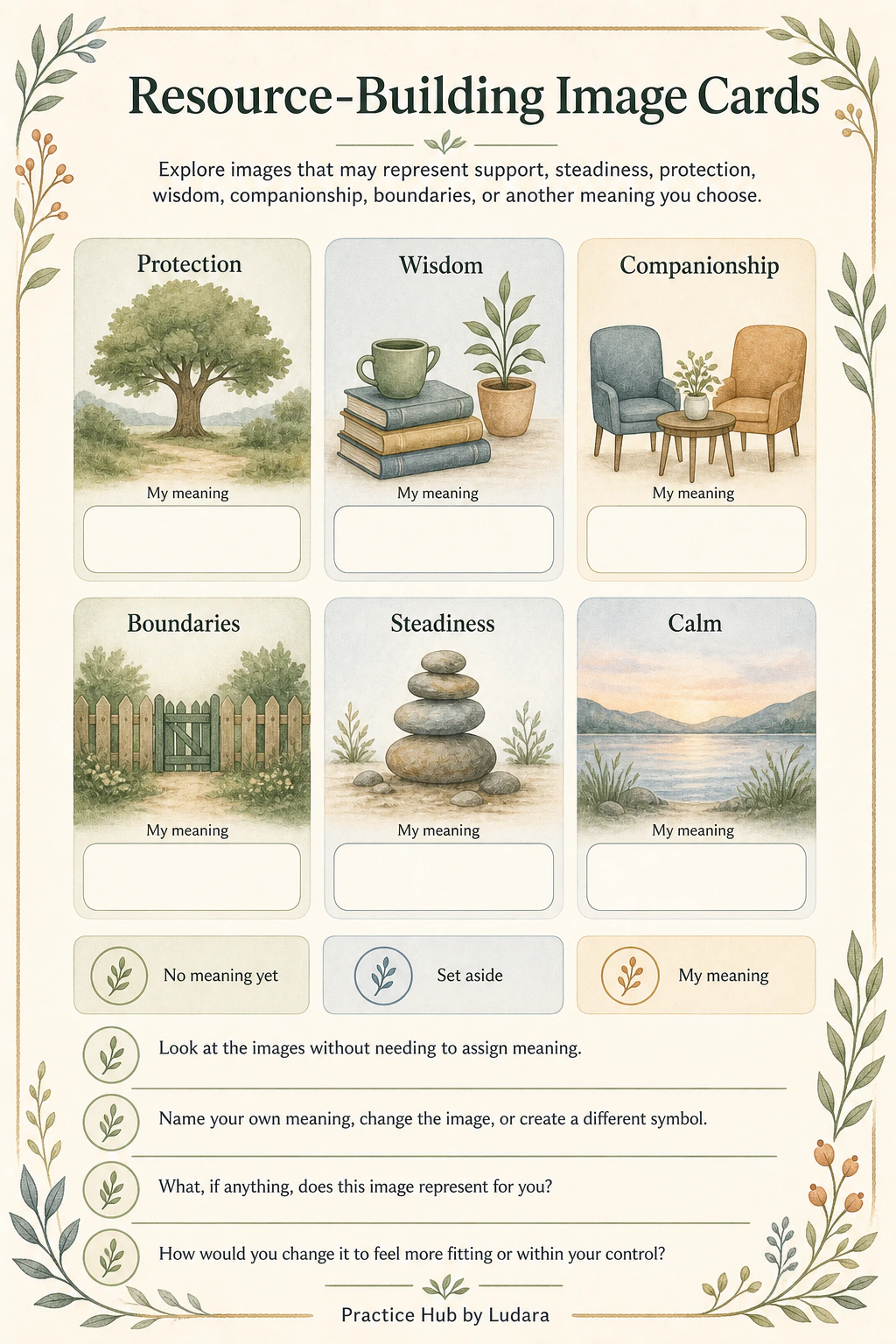
Resource-Building Image Cards
Choose an image that suggests support, steadiness, protection, companionship, wisdom, or boundaries to you, or give it your own meaning.
For clinician-facilitated use
This is a professional resource, not a child-facing online service. A licensed clinician or other qualified adult must determine suitability, explain and adapt the activity, and supervise its use. Do not direct a child to access this webpage independently or enter client information.
An adult professional should download the full-resolution WebP, which includes margins for printing. Read the guidance below before using it.
How to use it
- Look at the images without needing to assign meaning.
- If you want, choose one that feels neutral, interesting, or supportive enough.
- Name your own meaning, change the image, or create a different symbol.
- Set aside any image that feels unhelpful or activating.

Questions to explore
- What, if anything, does this image represent for you?
- How would you change it to feel more fitting or within your control?

Notes for the person facilitating
Let the participant define every symbol and avoid spiritual, archetypal, cultural, or universal interpretations. Favor neutral curiosity and external resources; do not use imagery to bypass material needs, safety concerns, or unwanted feelings.
Ways to adapt the activity
- Offer a fully blank card or participant-supplied image.
- Use objects, textures, music, or words instead of visual symbolism.
- Allow private selection without requiring explanation.
Professional use and fit
Before using this resource, a licensed clinician or other qualified adult should decide whether it fits the person, setting, goals, accessibility needs, and applicable local policies.