Trauma-Informed Resources · TI-05
My Support Circle
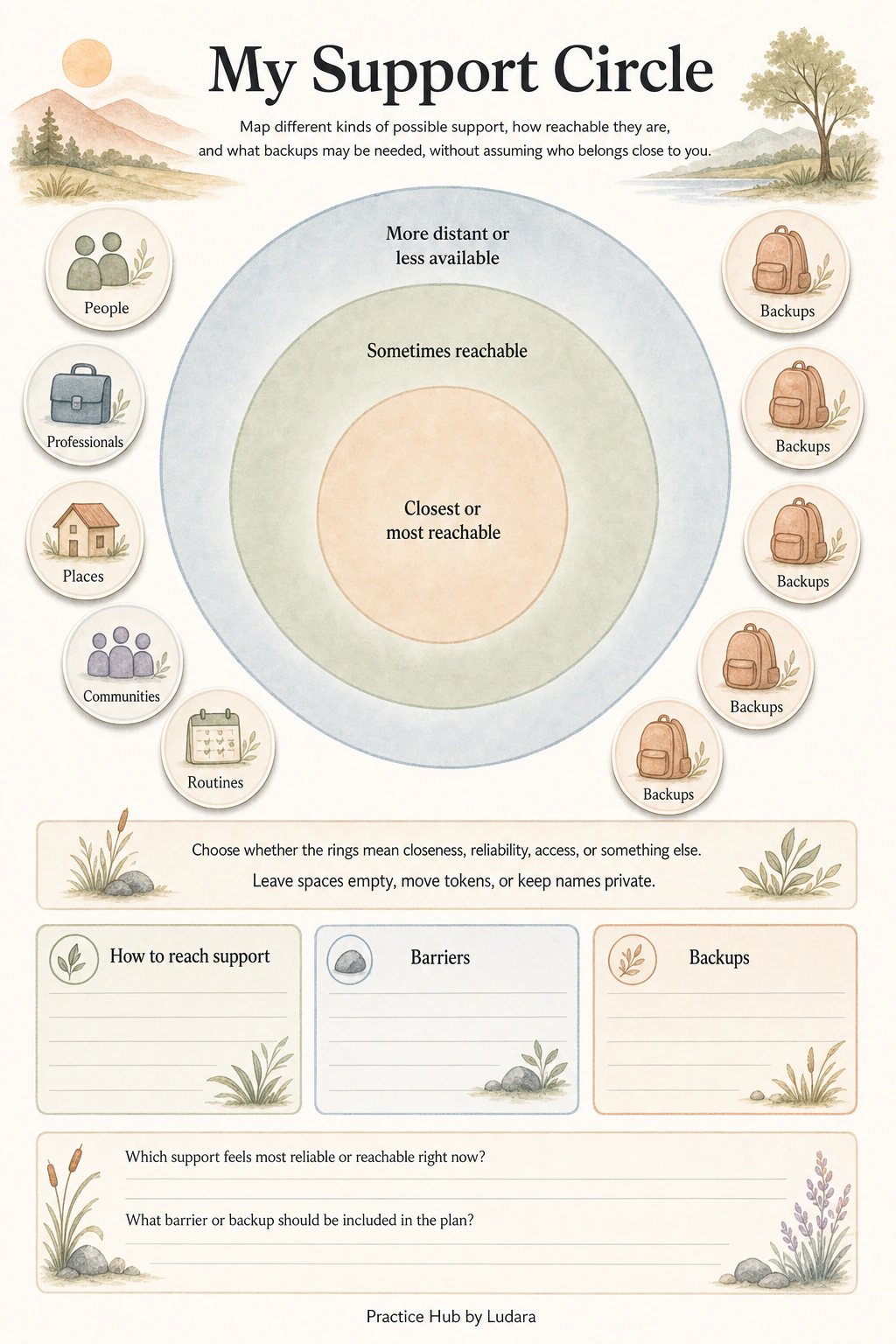
Map possible support, how you could reach it, and what backup you might need. No one has to belong in the closest circle.
For clinician-facilitated use
This is a professional resource, not a child-facing online service. A licensed clinician or other qualified adult must determine suitability, explain and adapt the activity, and supervise its use. Do not direct a child to access this webpage independently or enter client information.
An adult professional should download the full-resolution WebP, which includes margins for printing. Read the guidance below before using it.
How to use it
- Choose whether the rings mean closeness, reliability, access, or something else.
- Add people, professionals, places, communities, routines, or resources only where they fit for you.
- Leave spaces empty, move tokens, or keep names private.
- Add how to reach support and at least one backup where possible.

Questions to explore
- Which support feels most reliable or reachable right now?
- What barrier or backup should be included in the plan?

Notes for the person facilitating
Never assume family, caregivers, partners, institutions, or professionals are safe. Ask before naming supports, distinguish emotional from practical and emergency roles, and assess privacy risks if the completed map could be seen by others.
Ways to adapt the activity
- Use role labels, initials, icons, or coded names.
- Replace circles with a list, map, or separate support categories.
- Create a safely stored digital or portable version only with permission.
Professional use and fit
Before using this resource, a licensed clinician or other qualified adult should decide whether it fits the person, setting, goals, accessibility needs, and applicable local policies.