Self-Esteem & Identity · SI-09
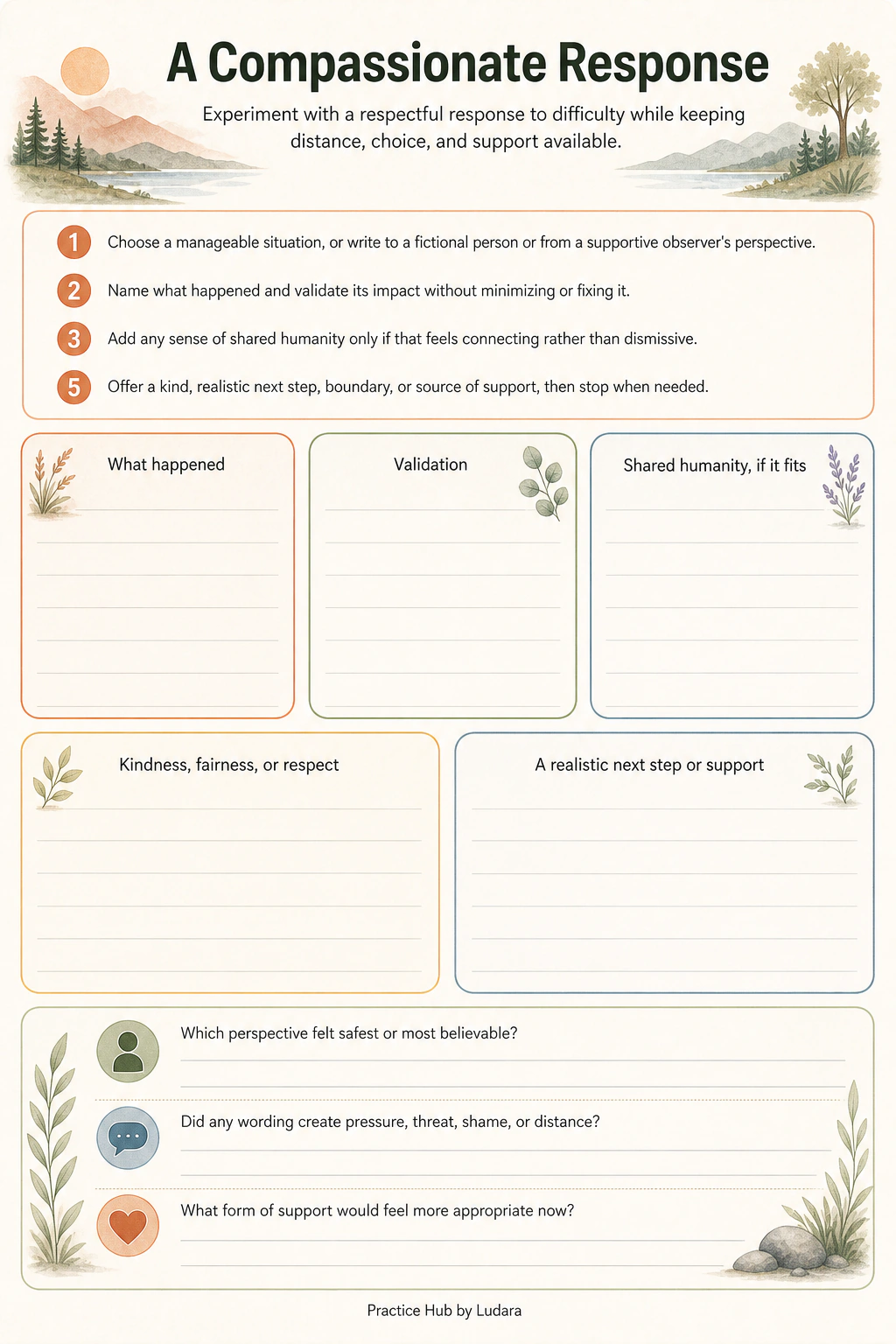
A Compassionate Response
Experiment with a respectful response to difficulty while keeping distance, choice, and support available.
Clinician-created · specialist review requiredFor clinician-facilitated use
This is a professional resource, not a child-facing online service. A licensed clinician or other qualified adult must determine suitability, explain and adapt the activity, and supervise its use. Do not direct a child to access this webpage independently or enter client information.
The full-resolution WebP includes print-safe margins and should be downloaded by an adult professional. Read the guidance below before using the page.
How to use it
- Choose a manageable situation, or write to a fictional person or from a supportive observer's perspective.
- Name what happened and validate its impact without minimizing or fixing it.
- Add any sense of shared humanity only if that feels connecting rather than dismissive.
- Offer a kind, realistic next step, boundary, or source of support, then stop when needed.

Reflection prompts
- Which perspective felt safest or most believable?
- Did any wording create pressure, threat, shame, or distance?
- What form of support would feel more appropriate now?

Facilitator guidance
Self-kindness can feel unsafe, unfamiliar, false, or activating for some clients. Assess readiness, avoid demanding warmth, and offer neutral respect, protective distance, or compassion toward another person as alternatives. Stop if distress increases.
Adaptations & accessibility
- Write from a neutral witness, future self, fictional character, or trusted support person's perspective.
- Use sentence fragments, audio, art, or a brief note rather than a letter.
- Replace kindness language with fairness, respect, protection, or non-harm.
Professional-use review
Enhanced licensed-clinician and trauma-informed review required; self-compassion practices may be threatening or dysregulating for some clients and must remain optional.