Self-Esteem & Identity · SI-03
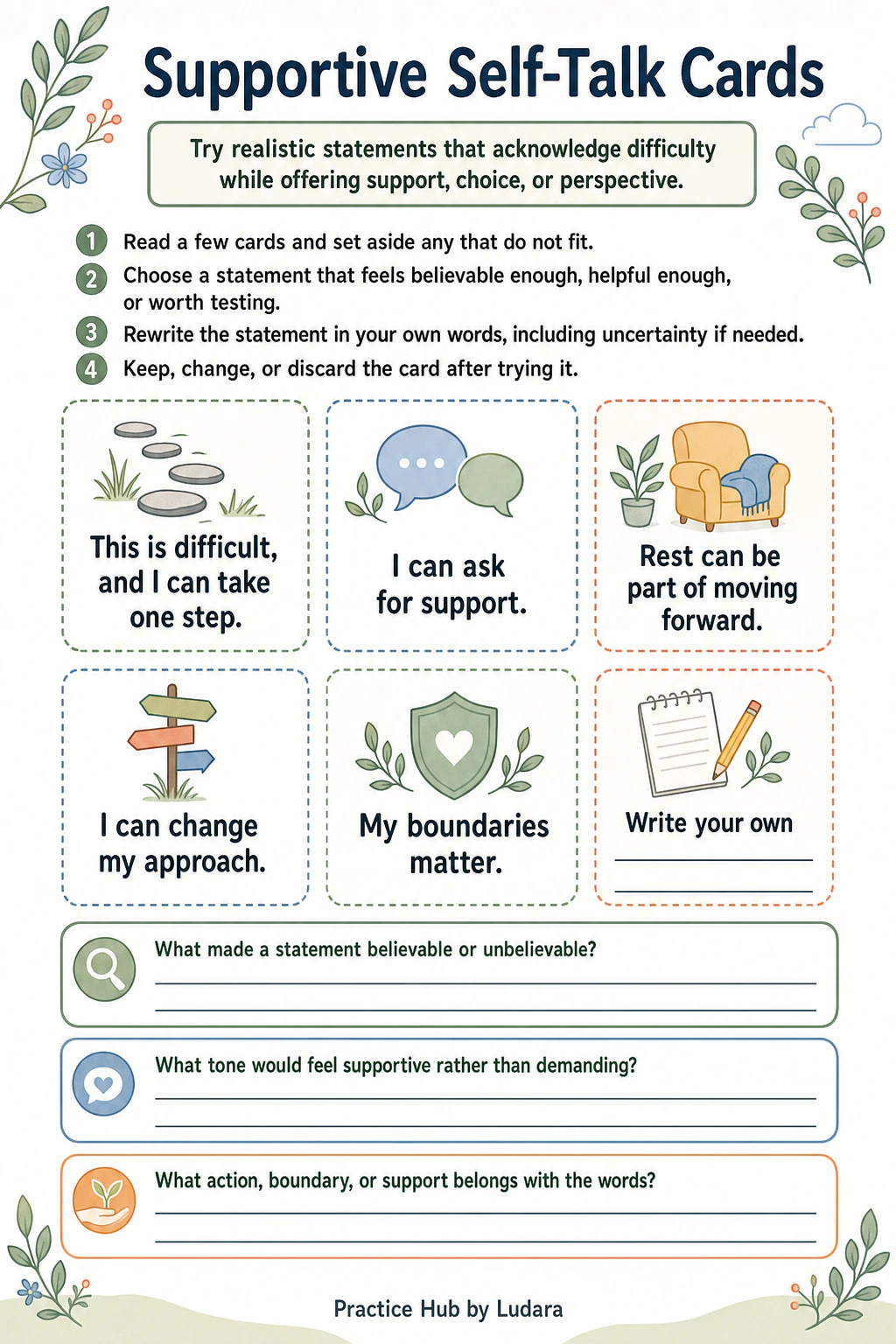
Supportive Self-Talk Cards
Try words of support that you can actually believe, with space for difficulty, uncertainty, and choices.
For clinician-facilitated use
This is a professional resource, not a child-facing online service. A licensed clinician or other qualified adult must determine suitability, explain and adapt the activity, and supervise its use. Do not direct a child to access this webpage independently or enter client information.
An adult professional should download the full-resolution WebP, which includes margins for printing. Read the guidance below before using it.
How to use it
- Read a few cards and set aside any that do not fit.
- Choose a statement that feels believable enough, helpful enough, or worth testing.
- Rewrite the statement in your own words, including uncertainty if needed.
- Keep, change, or discard the card after trying it.

Questions to explore
- What made a statement believable or unbelievable?
- What tone would feel supportive rather than demanding?
- What action, boundary, or support belongs with the words?

Notes for the person facilitating
Use specific, grounded statements and accept rejection of any card. Do not use affirmations to override grief, anger, danger, discrimination, unmet needs, or material barriers.
Ways to adapt the activity
- Offer sentence stems instead of completed statements.
- Record the client's own words as audio or symbols.
- Use third-person or supportive-other wording if first-person language feels uncomfortable.
Professional use and fit
Before using this resource, a licensed clinician or other qualified adult should decide whether it fits the person, setting, goals, accessibility needs, and applicable local policies.