Self-Esteem & Identity · SI-02
Strengths and Supports Tree
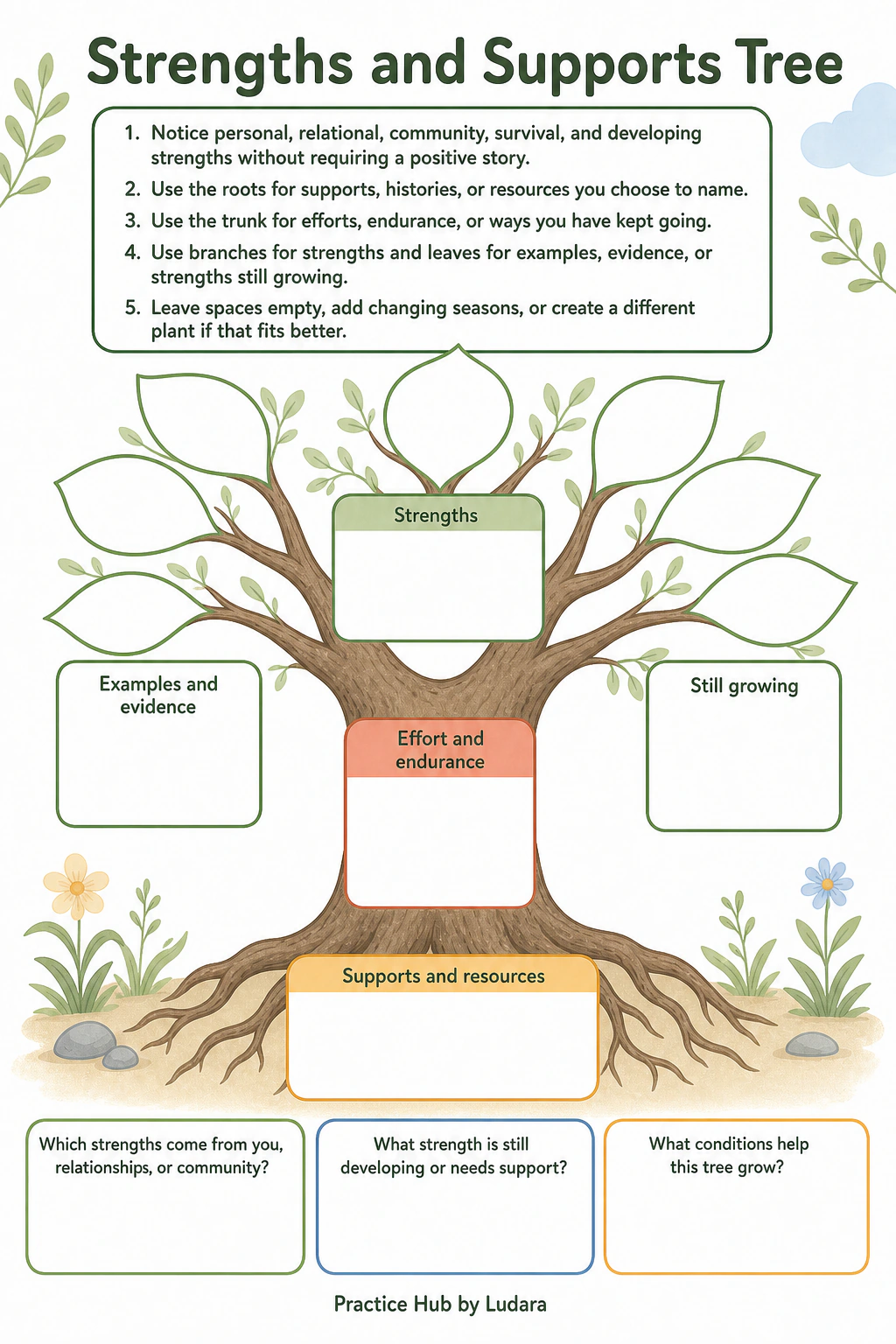
Notice personal, relational, community, survival, and developing strengths without requiring a positive story.
Clinician-created · facilitator review requiredFor clinician-facilitated use
This is a professional resource, not a child-facing online service. A licensed clinician or other qualified adult must determine suitability, explain and adapt the activity, and supervise its use. Do not direct a child to access this webpage independently or enter client information.
The full-resolution WebP includes print-safe margins and should be downloaded by an adult professional. Read the guidance below before using the page.
How to use it
- Use the roots for supports, histories, or resources you choose to name.
- Use the trunk for efforts, endurance, or ways you have kept going.
- Use branches for strengths and leaves for examples, evidence, or strengths still growing.
- Leave spaces empty, add changing seasons, or create a different plant if that fits better.

Reflection prompts
- Which strengths come from you, relationships, or community?
- What strength is still developing or needs support?
- What conditions help this tree grow?
Facilitator guidance
Broaden strengths beyond achievements or personality traits. Include adaptation, survival, asking for help, boundaries, cultural knowledge, and community resources while avoiding a required resilience narrative.
Adaptations & accessibility
- Use a river, constellation, garden, or building metaphor instead of a tree.
- Add photographs, symbols, or dictated responses.
- Complete one part at a time across sessions.
Professional-use review
Standard licensed-clinician and cultural-humility review required before use.