Self-Esteem & Identity · SI-08
The Critical Voice and the Supportive Voice
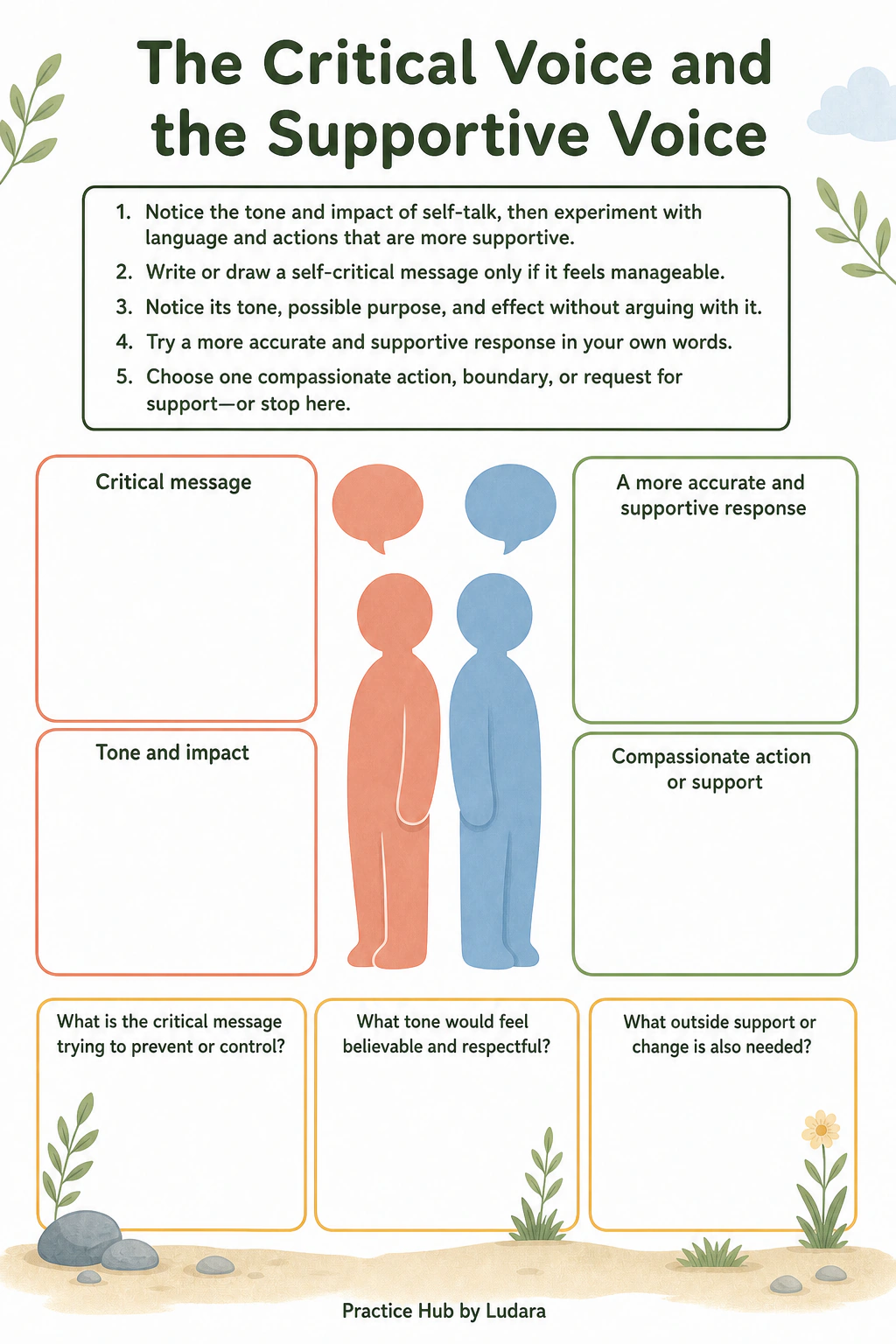
Notice the tone and impact of self-talk, then experiment with language and actions that are more supportive.
Clinician-created · facilitator review requiredFor clinician-facilitated use
This is a professional resource, not a child-facing online service. A licensed clinician or other qualified adult must determine suitability, explain and adapt the activity, and supervise its use. Do not direct a child to access this webpage independently or enter client information.
The full-resolution WebP includes print-safe margins and should be downloaded by an adult professional. Read the guidance below before using the page.
How to use it
- Write or draw a self-critical message only if it feels manageable.
- Notice its tone, possible purpose, and effect without arguing with it.
- Try a more accurate and supportive response in your own words.
- Choose one compassionate action, boundary, or request for support—or stop here.

Reflection prompts
- What is the critical message trying to prevent or control?
- What tone would feel believable and respectful?
- What outside support or change is also needed?

Facilitator guidance
Describe the figures as visual roles, not separate beings inside the client. If externalizing language is confusing, distressing, or inconsistent with the client's experience, use a simple two-column tone comparison instead.
Adaptations & accessibility
- Use harsh tone and supportive tone labels without characters.
- Respond as a trusted person might, or use third-person wording.
- Focus on a low-intensity example and omit the original critical wording.
Professional-use review
Standard licensed-clinician review required before use; avoid literalizing unwanted thoughts or implying they define the person.