Social & Communication · SC-06
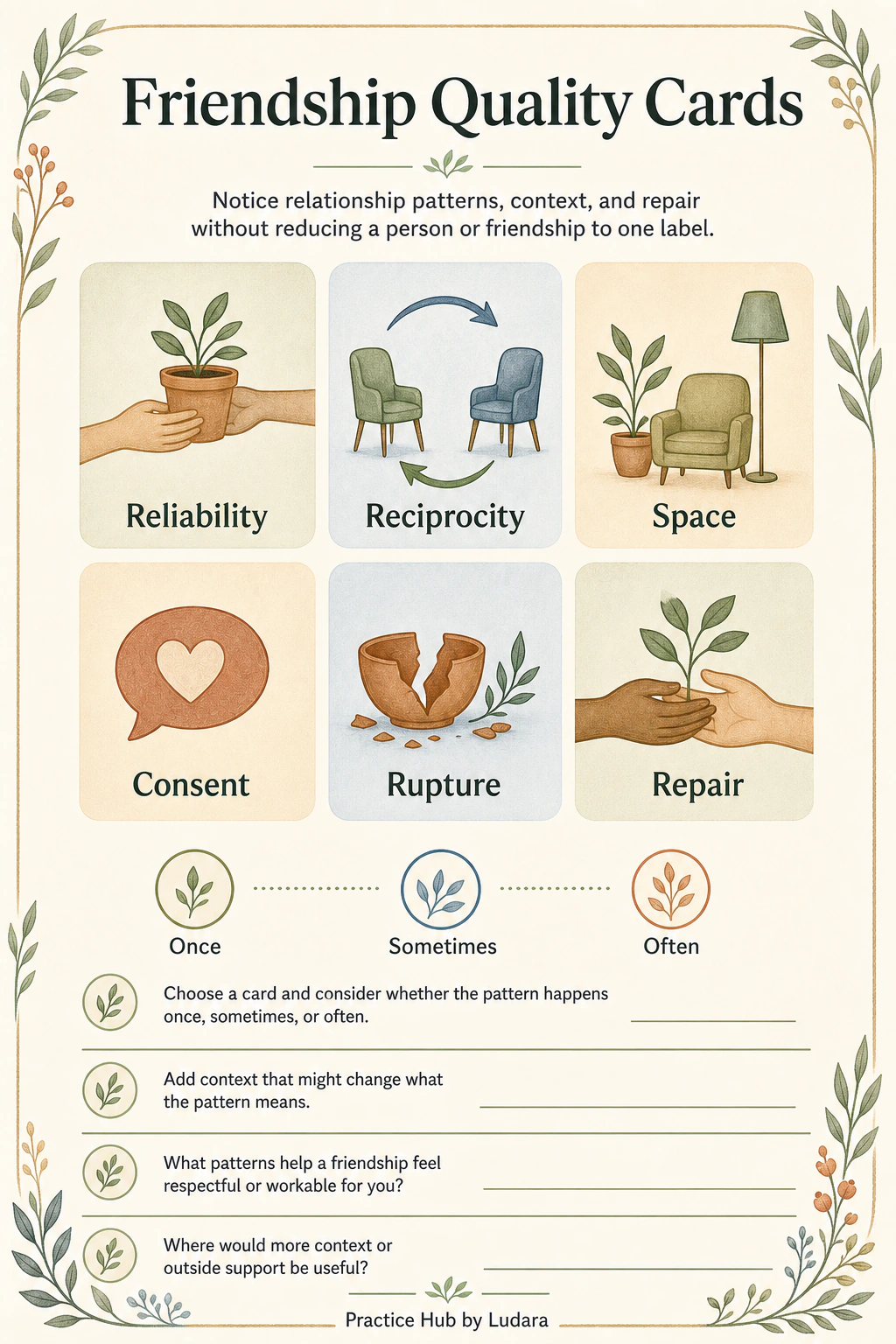
Friendship Quality Cards
Notice relationship patterns, context, and repair without reducing a person or friendship to one label.
Clinician-created · specialist review requiredFor clinician-facilitated use
This is a professional resource, not a child-facing online service. A licensed clinician or other qualified adult must determine suitability, explain and adapt the activity, and supervise its use. Do not direct a child to access this webpage independently or enter client information.
The full-resolution WebP includes print-safe margins and should be downloaded by an adult professional. Read the guidance below before using the page.
How to use it
- Choose a card and consider whether the pattern happens once, sometimes, or often.
- Add context that might change what the pattern means.
- If you want, identify a repair, boundary, distance, or support option.

Reflection prompts
- What patterns help a friendship feel respectful or workable for you?
- Where would more context or outside support be useful?

Facilitator guidance
Discuss patterns over time, impact, reciprocity, consent, and repair rather than assigning ‘good’ or ‘bad’ identities. Make room for cultural differences, disability access, misunderstandings, one-off mistakes, and relationships that require distance rather than repair.
Adaptations & accessibility
- Sort by frequency, impact, or confidence instead of color categories.
- Use fictional characters when personal discussion feels too exposing.
- Offer private written or AAC-supported responses.
Professional-use review
Licensed-clinician review required before use; specialist safeguarding review is required if cards raise concerns about exploitation, coercion, abuse, or unsafe contact.