Social & Communication · SC-01
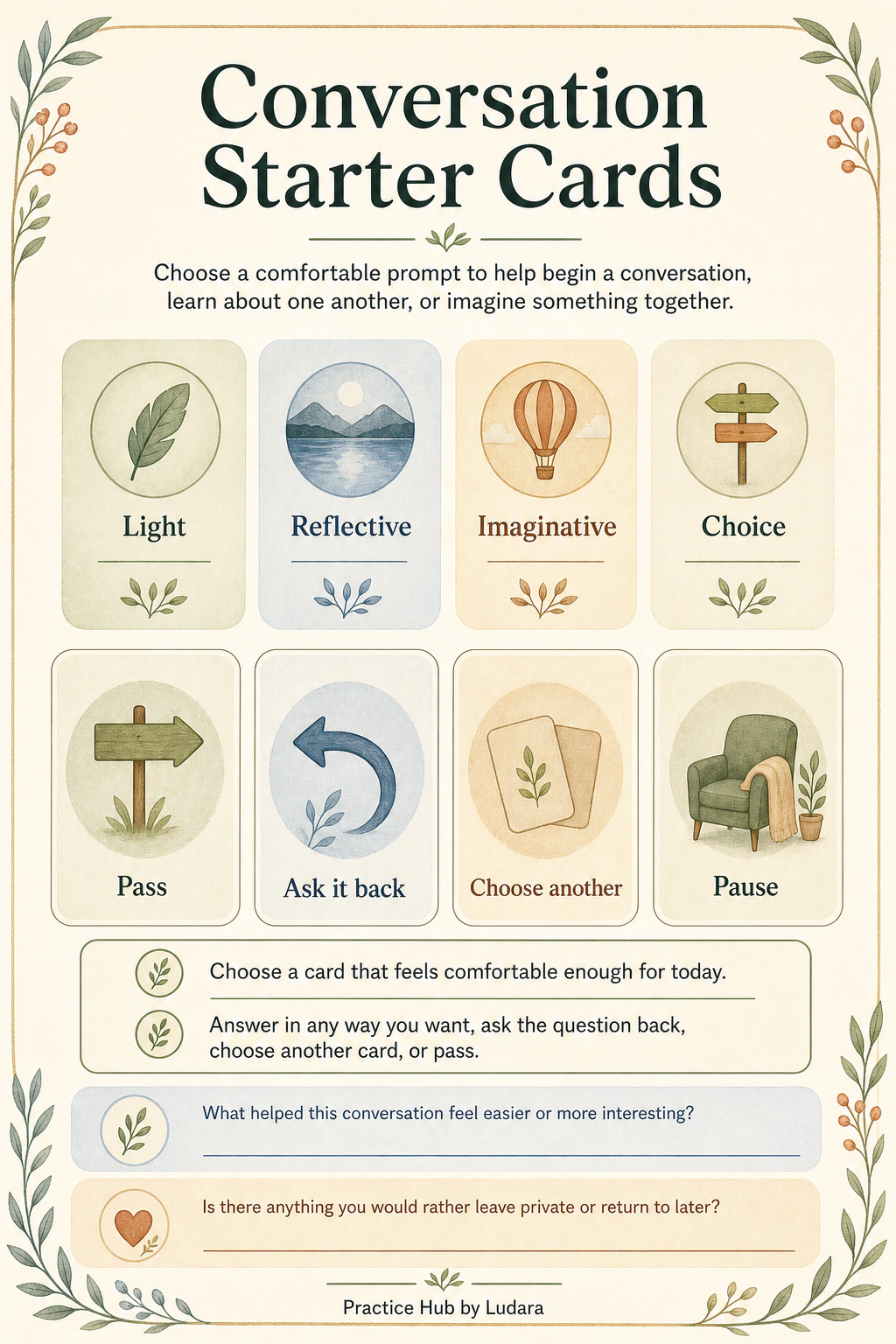
Conversation Starter Cards
Choose a comfortable prompt to help begin a conversation, learn about one another, or imagine something together.
Clinician-created · facilitator review requiredFor clinician-facilitated use
This is a professional resource, not a child-facing online service. A licensed clinician or other qualified adult must determine suitability, explain and adapt the activity, and supervise its use. Do not direct a child to access this webpage independently or enter client information.
The full-resolution WebP includes print-safe margins and should be downloaded by an adult professional. Read the guidance below before using the page.
How to use it
- Choose a card that feels comfortable enough for today.
- Answer in any way you want, ask the question back, choose another card, or pass.
- Pause or stop if the conversation no longer feels useful.

Reflection prompts
- What helped this conversation feel easier or more interesting?
- Is there anything you would rather leave private or return to later?

Facilitator guidance
Introduce passing, redirecting, and asking back as equally valid choices before play begins. Select prompts that fit the relationship, setting, developmental level, and available time; never use the cards to require personal disclosure.
Adaptations & accessibility
- Offer picture-supported, read-aloud, or large-print cards.
- Let participants answer by drawing, pointing, writing, or using an AAC system.
- Use only light or imaginative prompts for brief groups or new relationships.
Professional-use review
Standard licensed-clinician review required before use; confirm that prompts are voluntary, culturally responsive, and appropriate to the setting.