Social & Communication · SC-05
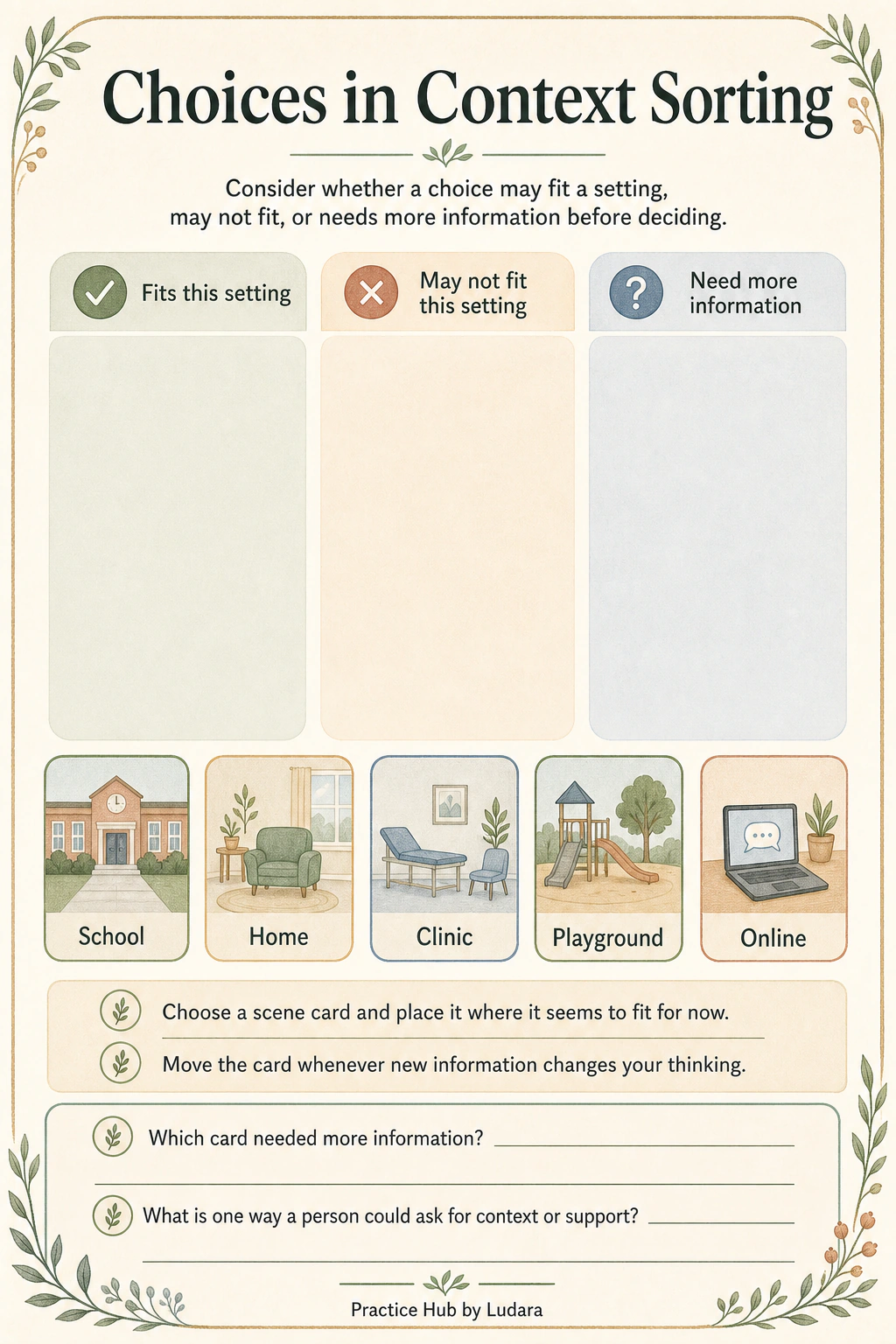
Choices in Context Sorting
Consider whether a choice may fit a setting, may not fit, or needs more information before deciding.
Clinician-created · facilitator review requiredFor clinician-facilitated use
This is a professional resource, not a child-facing online service. A licensed clinician or other qualified adult must determine suitability, explain and adapt the activity, and supervise its use. Do not direct a child to access this webpage independently or enter client information.
The full-resolution WebP includes print-safe margins and should be downloaded by an adult professional. Read the guidance below before using the page.
How to use it
- Choose a scene card and place it where it seems to fit for now.
- Name any context that could change your choice.
- Move the card whenever new information changes your thinking.

Reflection prompts
- Which card needed more information?
- What is one way a person could ask for context or support?

Facilitator guidance
Use the categories ‘fits this setting,’ ‘may not fit this setting,’ and ‘need more information.’ Focus on safety, access, consent, and shared expectations rather than compliance, eye contact, quiet bodies, or other masking demands.
Adaptations & accessibility
- Use photos or examples from the participant's actual environments with consent.
- Offer a fourth category for ‘depends on the person or agreement.’
- Let participants sort collaboratively, nonverbally, or with fewer cards.
Professional-use review
Licensed-clinician and neurodiversity-informed review required before use; confirm that the content does not enforce masking, cultural conformity, or obedience for its own sake.