Practice-Facing Resources · PF-08
Calm-Corner Choice Materials
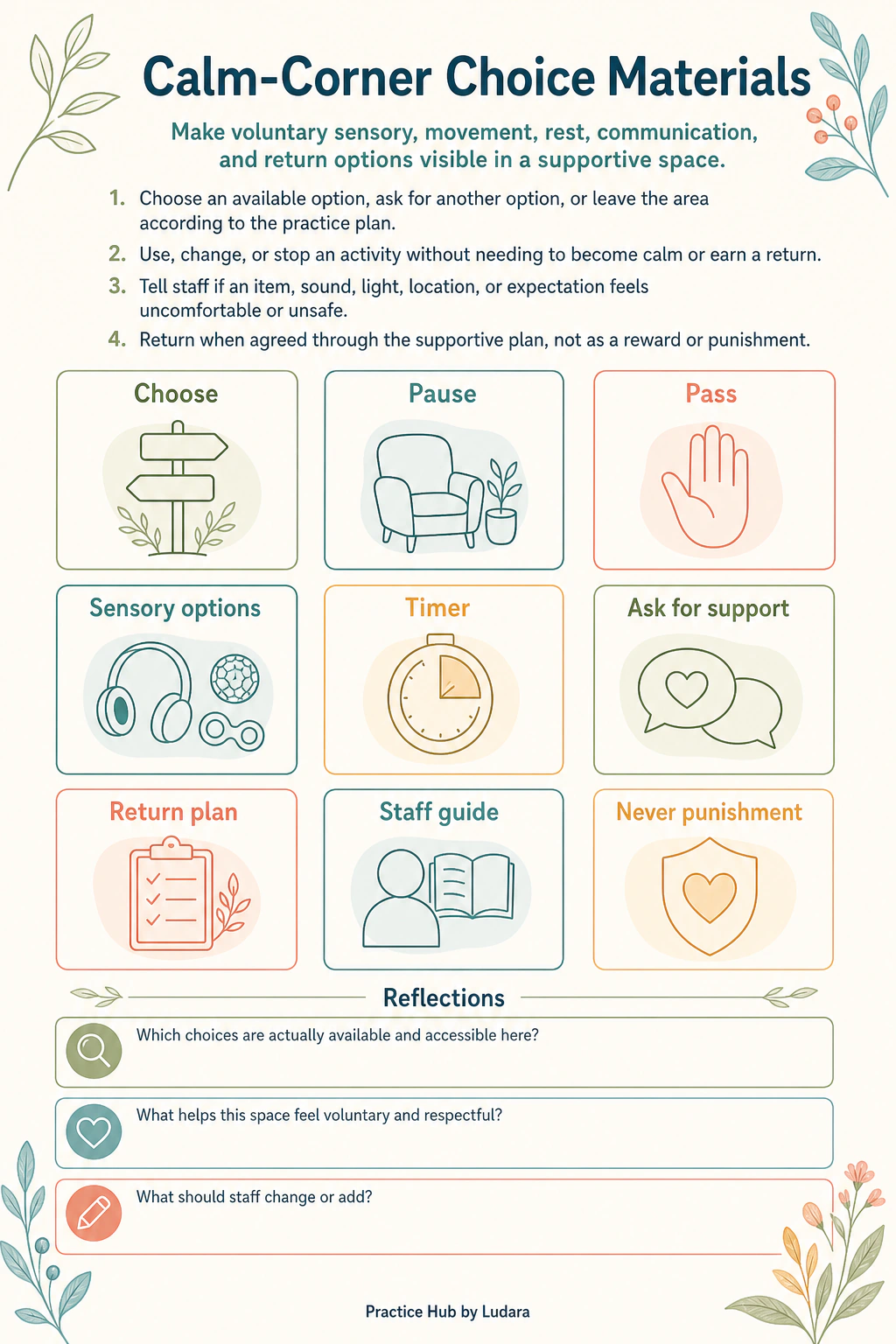
Show the sensory, movement, rest, communication, and return choices that a voluntary supportive space can offer.
For clinician-facilitated use
This is a professional resource, not a child-facing online service. A licensed clinician or other qualified adult must determine suitability, explain and adapt the activity, and supervise its use. Do not direct a child to access this webpage independently or enter client information.
An adult professional should download the full-resolution WebP, which includes margins for printing. Read the guidance below before using it.
How to use it
- Choose an available option, ask for another option, or leave the area according to the practice plan.
- Use, change, or stop an activity without needing to become calm or earn a return.
- Tell staff if an item, sound, light, location, or expectation feels uncomfortable or unsafe.
- Return when agreed through the supportive plan, not as a reward or punishment.

Questions to explore
- Which choices are actually available and accessible here?
- What helps this space feel voluntary and respectful?
- What should staff change or add?

Notes for the person facilitating
Implement only as a voluntary supportive resource. The space must never function as seclusion, exclusion, discipline, coercion, or a condition for participation. Staff need a clear supervision, sanitation, accessibility, consent, and return plan.
Ways to adapt the activity
- Provide low-sensory, movement, seated, communication, and no-equipment choices.
- Offer portable options for clients who cannot or do not want to use the designated space.
- Use individualized visual or AAC choice boards.
Professional use and fit
Before using this resource, a licensed clinician or other qualified adult should decide whether it fits the person, setting, goals, accessibility needs, and applicable local policies.