Practice-Facing Resources · PF-02
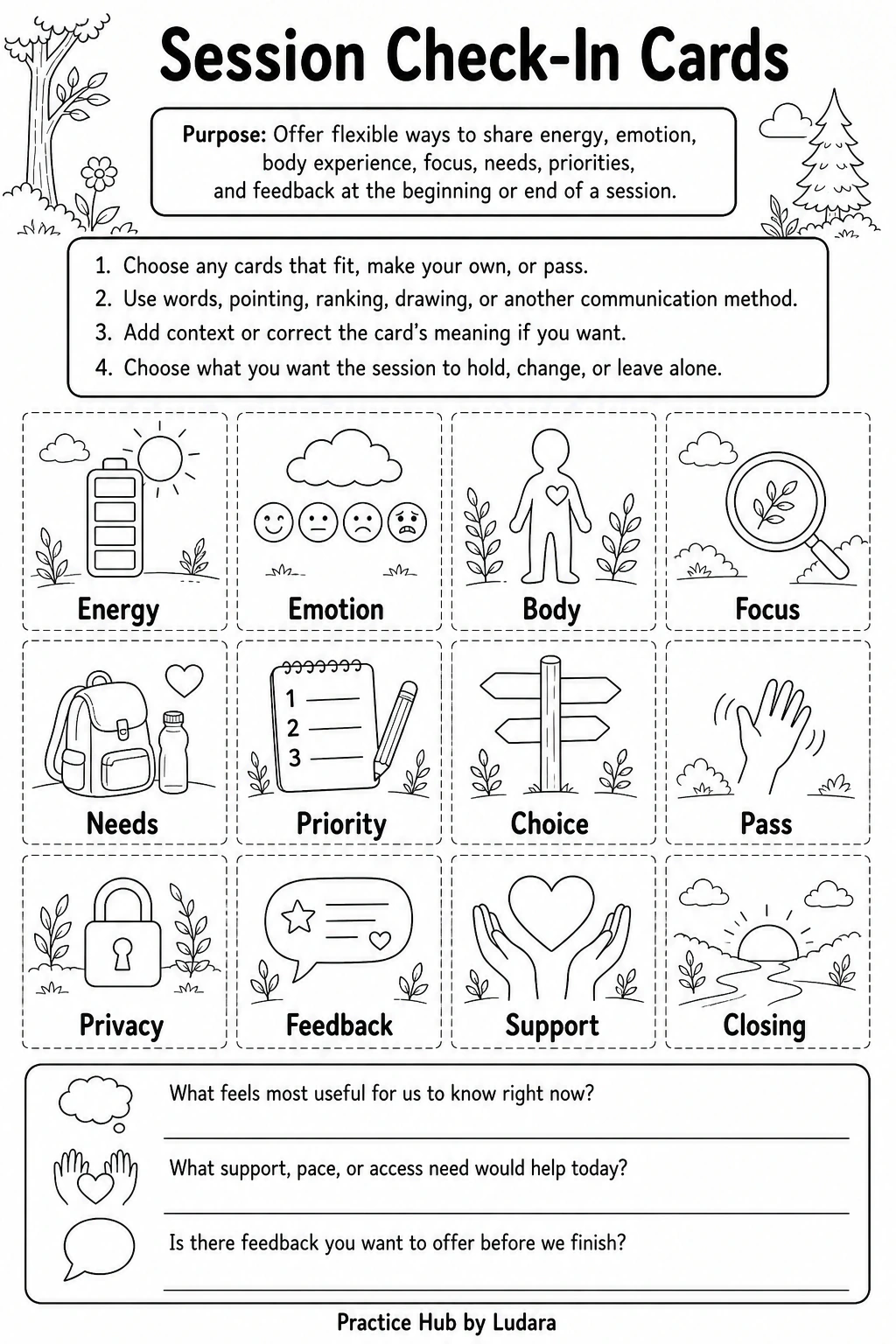
Session Check-In Cards
Offer flexible ways to share energy, emotion, body experience, focus, needs, priorities, and feedback at the beginning or end of a session.
Clinician-created · facilitator review requiredFor clinician-facilitated use
This is a professional resource, not a child-facing online service. A licensed clinician or other qualified adult must determine suitability, explain and adapt the activity, and supervise its use. Do not direct a child to access this webpage independently or enter client information.
The full-resolution WebP includes print-safe margins and should be downloaded by an adult professional. Read the guidance below before using the page.
How to use it
- Choose any cards that fit, make your own, or pass.
- Use words, pointing, ranking, drawing, or another communication method.
- Add context or correct the card's meaning if you want.
- Choose what you want the session to hold, change, or leave alone.

Reflection prompts
- What feels most useful for us to know right now?
- What support, pace, or access need would help today?
- Is there feedback you want to offer before we finish?

Facilitator guidance
Use cards to support communication, not to score, diagnose, or replace assessment. Follow the client's meaning and ensure feedback can be given without penalty.
Adaptations & accessibility
- Provide child, teen, adult, high-contrast, and symbol-supported editions.
- Use eye gaze, AAC, gesture, or yes/no selection.
- Offer private selection before discussion.
Professional-use review
Required local customization plus licensed-clinician, accessibility, and privacy review before use, including escalation and documentation workflows.