Practice-Facing Resources · PF-04
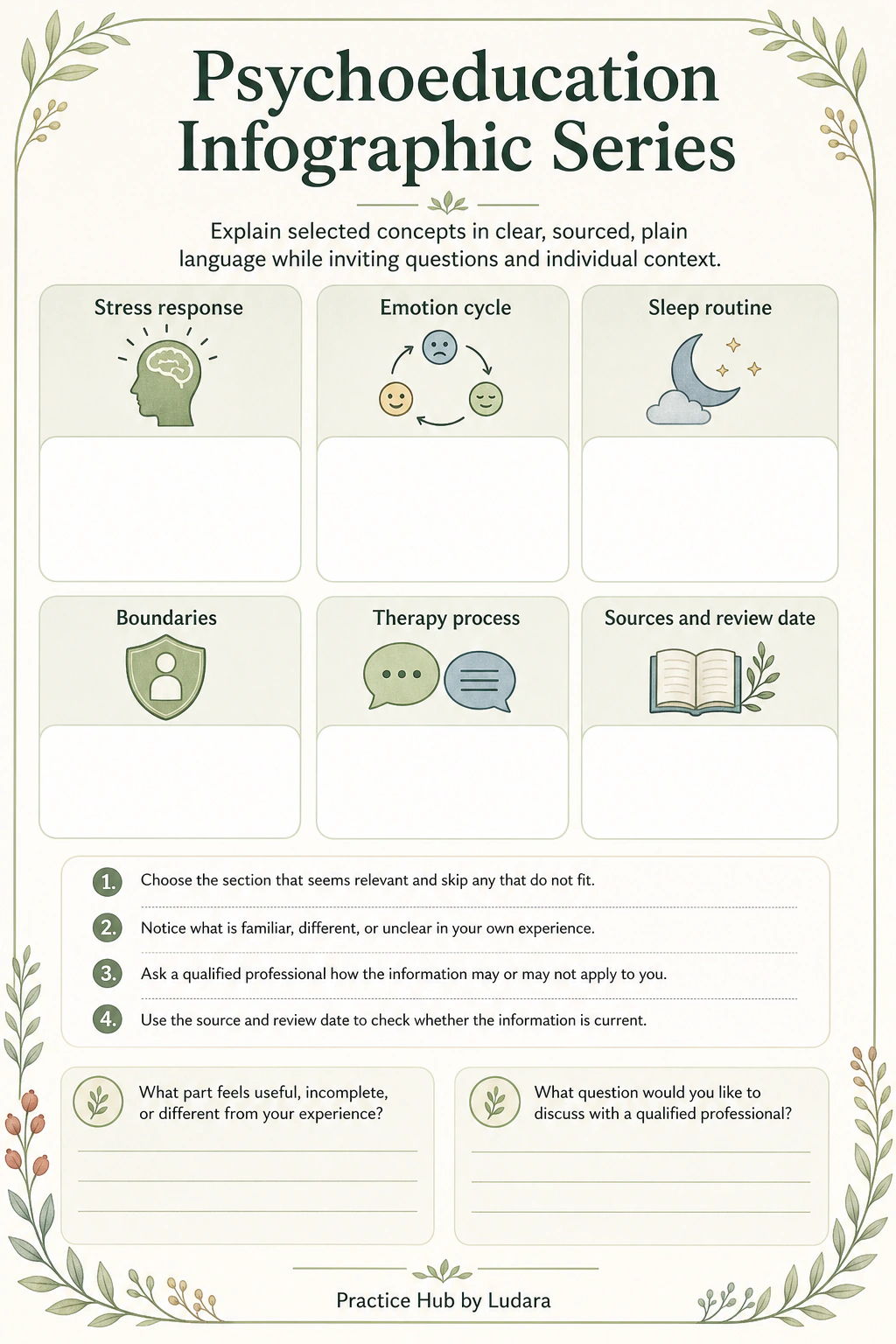
Psychoeducation Infographic Series
Explain a selected concept in plain language with sources, space for questions, and room for individual experiences.
For clinician-facilitated use
This is a professional resource, not a child-facing online service. A licensed clinician or other qualified adult must determine suitability, explain and adapt the activity, and supervise its use. Do not direct a child to access this webpage independently or enter client information.
An adult professional should download the full-resolution WebP, which includes margins for printing. Read the guidance below before using it.
How to use it
- Choose the section that seems relevant and skip any that do not fit.
- Notice what is familiar, different, or unclear in your own experience.
- Ask a qualified professional how the information may or may not apply to you.
- Use the source and review date to check whether the information is current.

Questions to explore
- What part feels useful, incomplete, or different from your experience?
- What question would you like to discuss with a qualified professional?

Notes for the person facilitating
Use only evidence-supported claims appropriate to the intended audience. Every infographic requires visible sources, publication or review date, scope limits, and a clear distinction between general education and individualized advice.
Ways to adapt the activity
- Provide plain-language, high-contrast, screen-reader-ready, and translated versions.
- Break complex diagrams into a short sequence.
- Offer a take-home handout with full citations.
Professional use and fit
Before using this resource, a licensed clinician or other qualified adult should decide whether it fits the person, setting, goals, accessibility needs, and applicable local policies.