Practice-Facing Resources · PF-07
Therapist Resource Cards
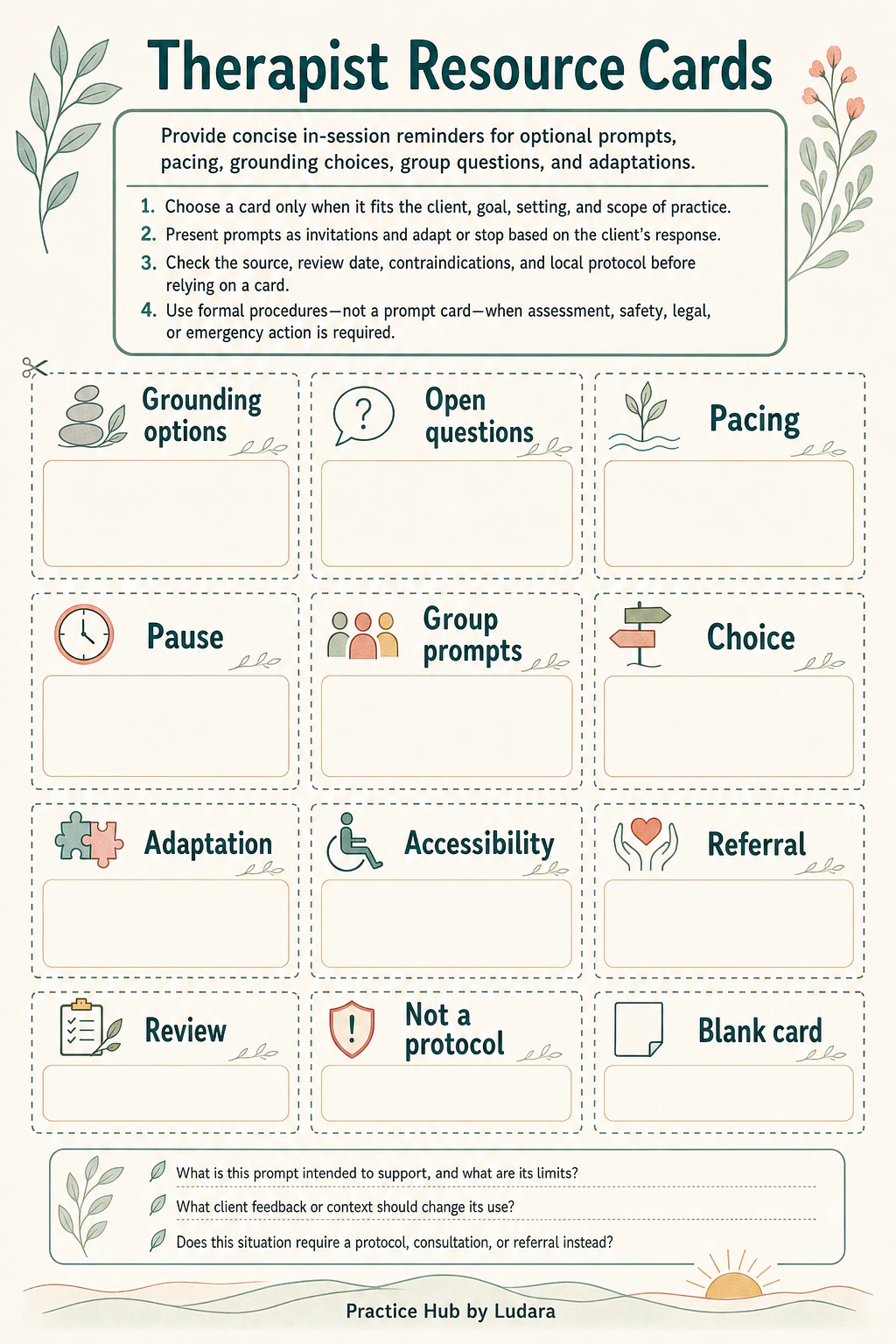
Keep brief reminders of prompts, pacing, grounding choices, group questions, and adaptations within reach during sessions.
For clinician-facilitated use
This is a professional resource, not a child-facing online service. A licensed clinician or other qualified adult must determine suitability, explain and adapt the activity, and supervise its use. Do not direct a child to access this webpage independently or enter client information.
An adult professional should download the full-resolution WebP, which includes margins for printing. Read the guidance below before using it.
How to use it
- Choose a card only when it fits the client, goal, setting, and scope of practice.
- Present prompts as invitations and adapt or stop based on the client's response.
- Check the source, review date, contraindications, and local protocol before relying on a card.
- Use formal procedures—not a prompt card—when assessment, safety, legal, or emergency action is required.

Questions to explore
- What is this prompt intended to support, and what are its limits?
- What client feedback or context should change its use?
- Does this situation require a protocol, consultation, or referral instead?

Notes for the person facilitating
Cards are reminders, not protocols, competencies, or clinical decision rules. Cite the underlying source and keep review dates, scope limits, and escalation routes current.
Ways to adapt the activity
- Create discipline-, setting-, population-, and modality-specific subsets.
- Provide large-print, screen-readable, and searchable digital versions.
- Add locally approved consultation and protocol references.
Professional use and fit
Before using this resource, a licensed clinician or other qualified adult should decide whether it fits the person, setting, goals, accessibility needs, and applicable local policies.