Emotional Awareness · EA-05
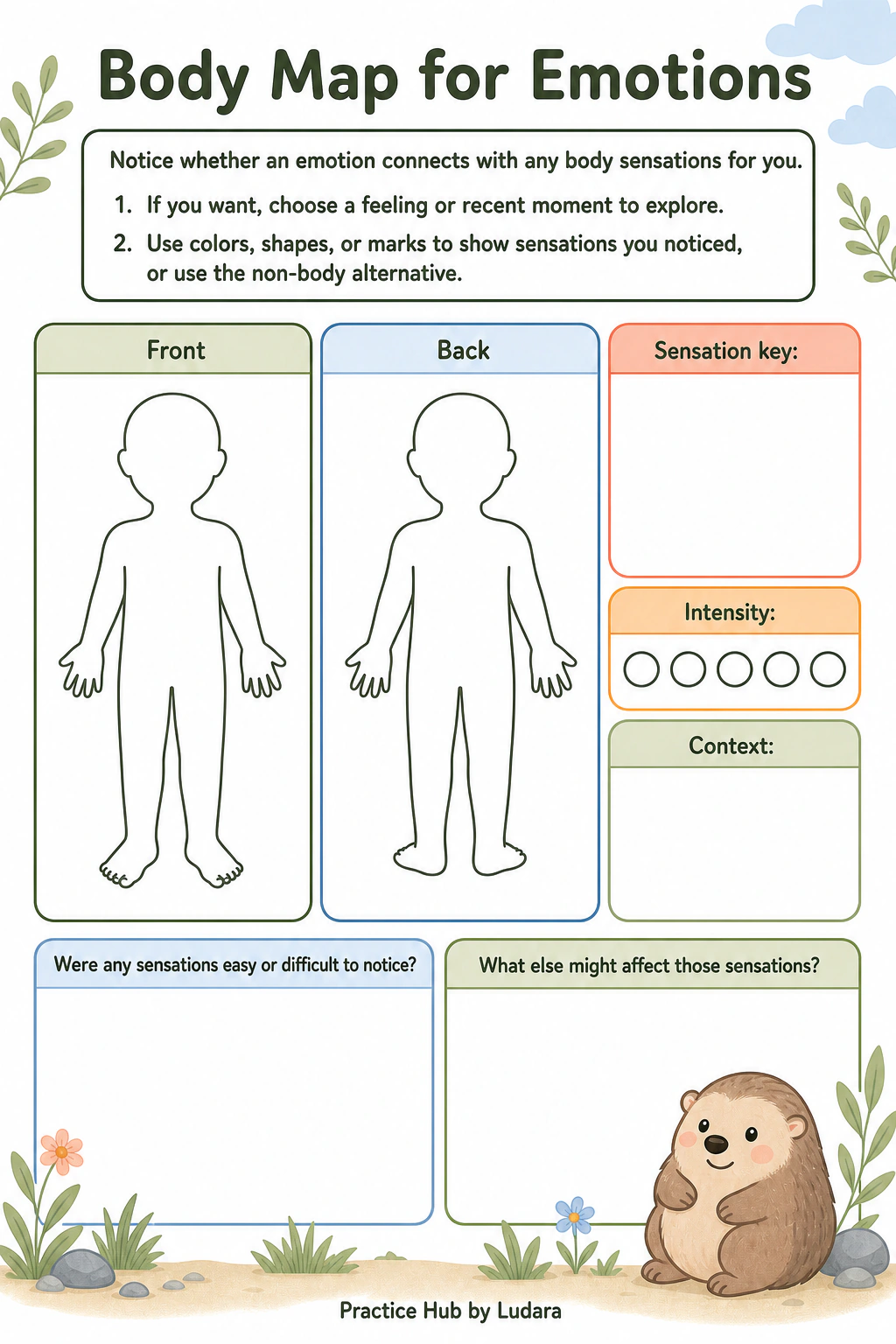
Body Map for Emotions
Notice whether an emotion connects with any body sensations for you.
Clinician-created · specialist review requiredFor clinician-facilitated use
This is a professional resource, not a child-facing online service. A licensed clinician or other qualified adult must determine suitability, explain and adapt the activity, and supervise its use. Do not direct a child to access this webpage independently or enter client information.
The full-resolution WebP includes print-safe margins and should be downloaded by an adult professional. Read the guidance below before using the page.
How to use it
- If you want, choose a feeling or recent moment to explore.
- Use colors, shapes, or marks to show sensations you noticed, or use the non-body alternative.
- Stop, pass, or shift attention to the room if body noticing feels uncomfortable.

Reflection prompts
- Were any sensations easy or difficult to notice?
- What else might affect those sensations?
- What would help you feel supported or comfortable now?

Facilitator guidance
Offer this as optional exploration, not evidence of an emotion or diagnosis. Monitor comfort, avoid interpreting marks for the person, and provide an object-, weather-, or color-based alternative.
Adaptations & accessibility
- Map sensations onto a weather scene or abstract outline instead of a body.
- Allow pointing, stickers, or verbal description rather than drawing.
- Use a seated or mobility-inclusive body outline selected by the client.
Professional-use review
Enhanced trauma-sensitive and licensed-clinician review required before use.