Mindfulness & Grounding · MF-05
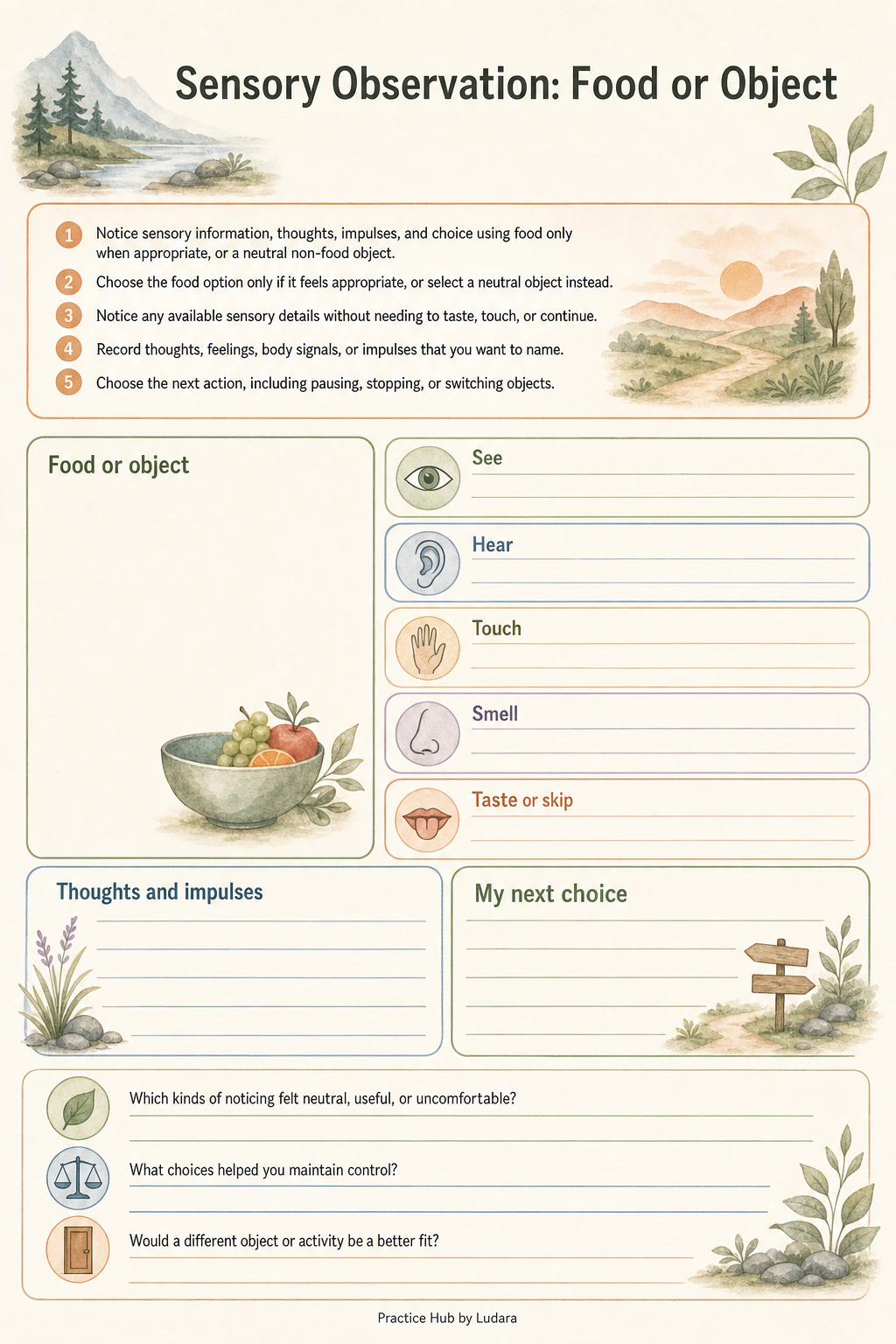
Sensory Observation: Food or Object
Notice sensory information, thoughts, impulses, and choice using food only when appropriate, or a neutral non-food object.
Clinician-created · specialist review requiredFor clinician-facilitated use
This is a professional resource, not a child-facing online service. A licensed clinician or other qualified adult must determine suitability, explain and adapt the activity, and supervise its use. Do not direct a child to access this webpage independently or enter client information.
The full-resolution WebP includes print-safe margins and should be downloaded by an adult professional. Read the guidance below before using the page.
How to use it
- Choose the food option only if it feels appropriate, or select a neutral object instead.
- Notice any available sensory details without needing to taste, touch, or continue.
- Record thoughts, feelings, body signals, or impulses that you want to name.
- Choose the next action, including pausing, stopping, or switching objects.

Reflection prompts
- Which kinds of noticing felt neutral, useful, or uncomfortable?
- What choices helped you maintain control?
- Would a different object or activity be a better fit?

Facilitator guidance
Do not use the food version without appropriate screening and eating-disorder-informed judgment. Avoid nutrition, weight, body, restraint, exposure, or moralized-food framing. A non-food option must always be available without explanation.
Adaptations & accessibility
- Use a stone, fabric, art material, or other neutral object.
- Skip taste, smell, touch, or any inaccessible or aversive sense.
- Observe from a comfortable distance or use a photograph.
Professional-use review
Eating-disorder specialist and licensed-clinician review required before use; the non-food alternative must remain fully equivalent and optional.