Mindfulness & Grounding · MF-04
Optional Imagination Cards
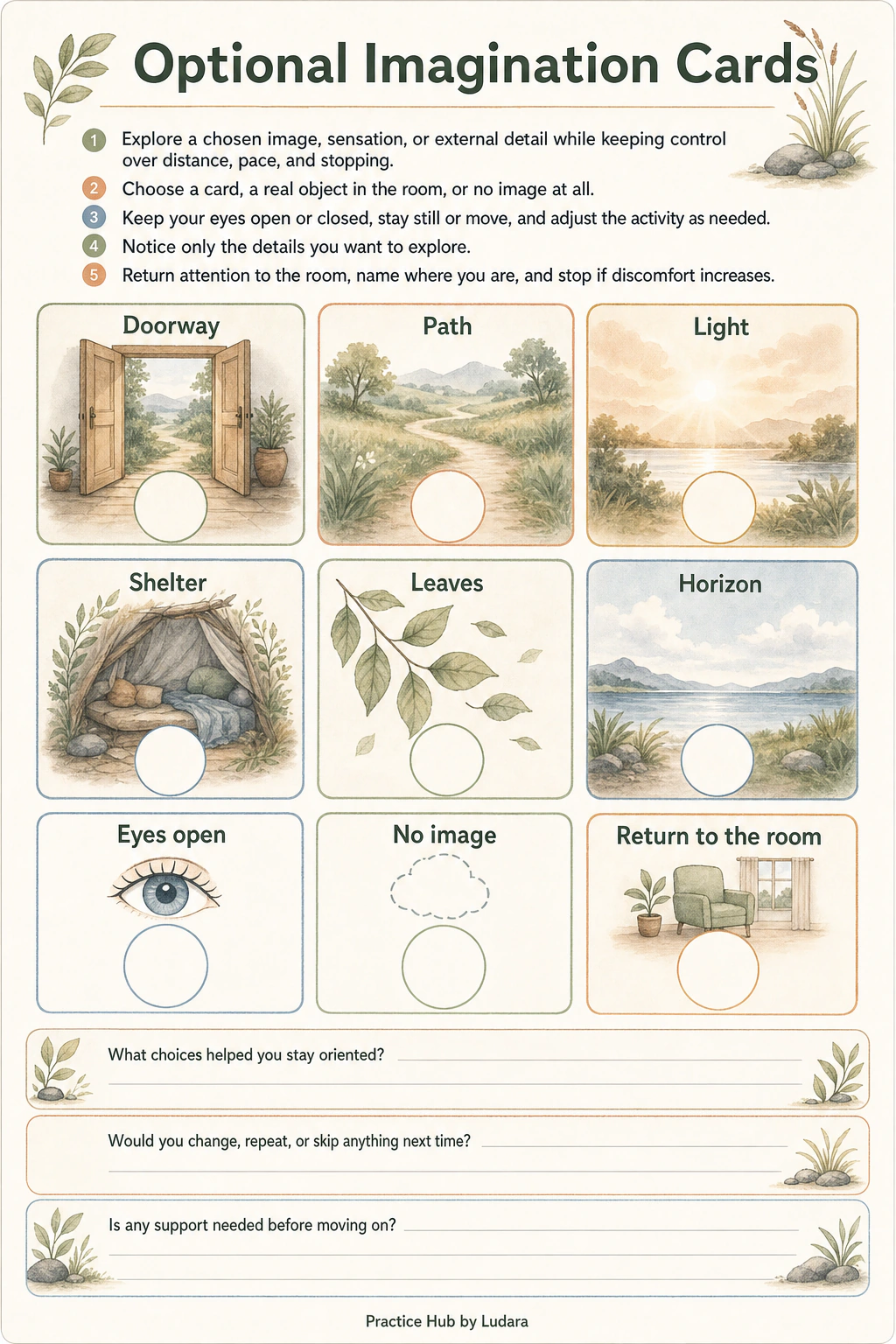
Choose an image, sensation, or detail in the room to explore, keeping control of the pace, distance, and when to stop.
For clinician-facilitated use
This is a professional resource, not a child-facing online service. A licensed clinician or other qualified adult must determine suitability, explain and adapt the activity, and supervise its use. Do not direct a child to access this webpage independently or enter client information.
An adult professional should download the full-resolution WebP, which includes margins for printing. Read the guidance below before using it.
How to use it
- Choose a card, a real object in the room, or no image at all.
- Keep your eyes open or closed, stay still or move, and adjust the activity as needed.
- Notice only the details you want to explore.
- Return attention to the room, name where you are, and stop if discomfort increases.

Questions to explore
- What choices helped you stay oriented?
- Would you change, repeat, or skip anything next time?
- Is any support needed before moving on?

Notes for the person facilitating
Use only with trauma-informed pacing and consent. Screen for imagery-related discomfort, dissociation, psychosis-related concerns, or other reasons visualization may be unsuitable. Maintain an eyes-open, environment-based alternative and a clear return process.
Ways to adapt the activity
- Describe a neutral object that is physically present instead of imagining a scene.
- Let the client choose distance, duration, posture, and whether the facilitator speaks.
- Use drawing, music without lyrics, or texture as the focus.
Professional use and fit
Before using this resource, a licensed clinician or other qualified adult should decide whether it fits the person, setting, goals, accessibility needs, and applicable local policies.