Grief & Life Transitions · GR-07
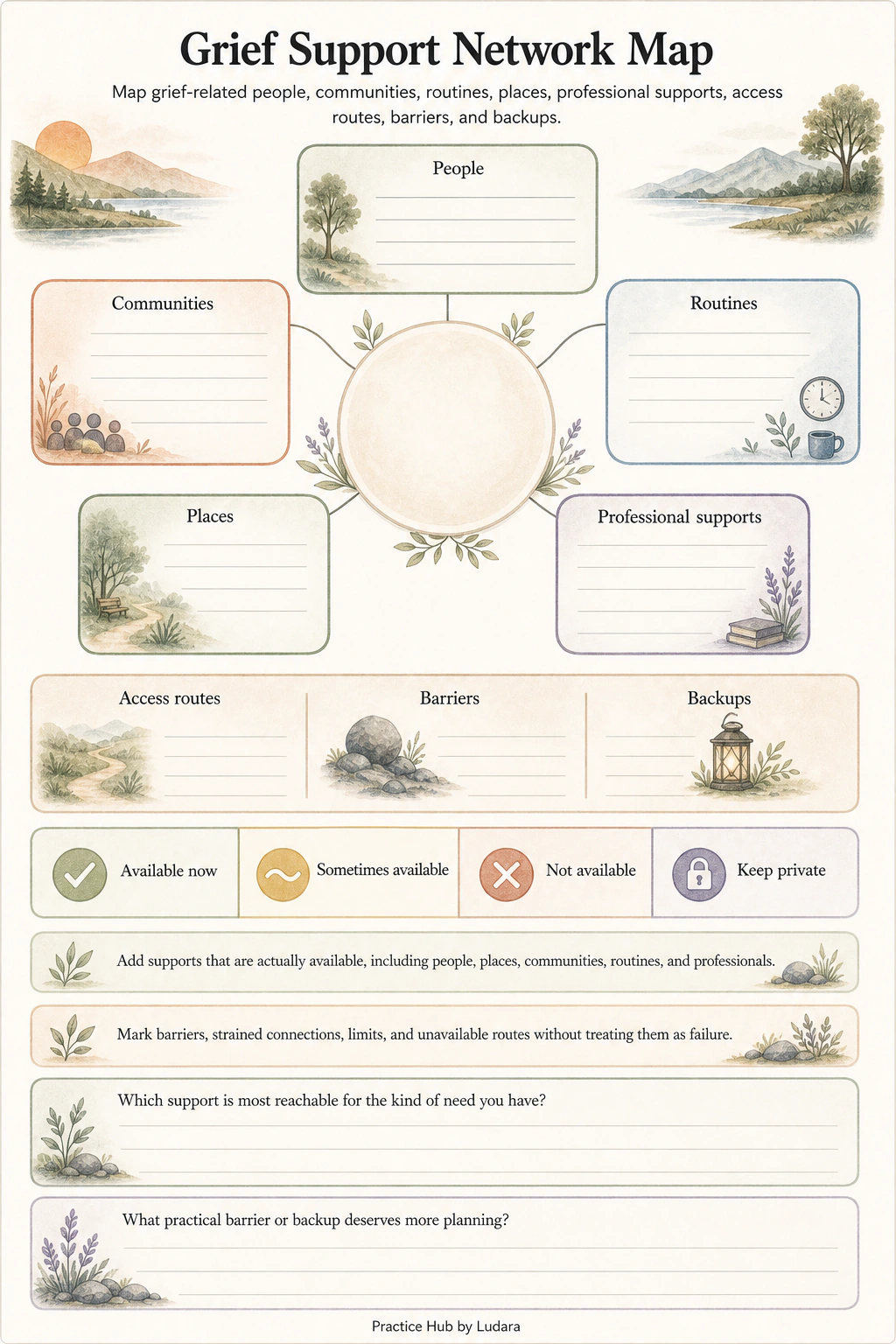
Grief Support Network Map
Map the people, places, routines, and services that might support you in grief, including how to reach them and what could get in the way.
For clinician-facilitated use
This is a professional resource, not a child-facing online service. A licensed clinician or other qualified adult must determine suitability, explain and adapt the activity, and supervise its use. Do not direct a child to access this webpage independently or enter client information.
An adult professional should download the full-resolution WebP, which includes margins for printing. Read the guidance below before using it.
How to use it
- Choose what each node or route will mean for you.
- Add supports that are actually available, including people, places, communities, routines, and professionals.
- Mark barriers, strained connections, limits, and unavailable routes without treating them as failure.
- Add an access plan and backup where possible; keep identifying details private if needed.

Questions to explore
- Which support is most reachable for the kind of need you have?
- What practical barrier or backup deserves more planning?

Notes for the person facilitating
Verify availability, role, consent, accessibility, cost, transportation, timing, and privacy rather than assuming a full network. Distinguish companionship, practical help, clinical support, cultural/community support, and urgent local help.
Ways to adapt the activity
- Use initials, roles, coded labels, or a securely stored version.
- Replace the map with a list, calendar, transit plan, or phone menu.
- Include remote, sensory-accessible, language-accessible, and practical supports.
Professional use and fit
Before using this resource, a licensed clinician or other qualified adult should decide whether it fits the person, setting, goals, accessibility needs, and applicable local policies.