Grief & Life Transitions · GR-01
Memory Book Pages
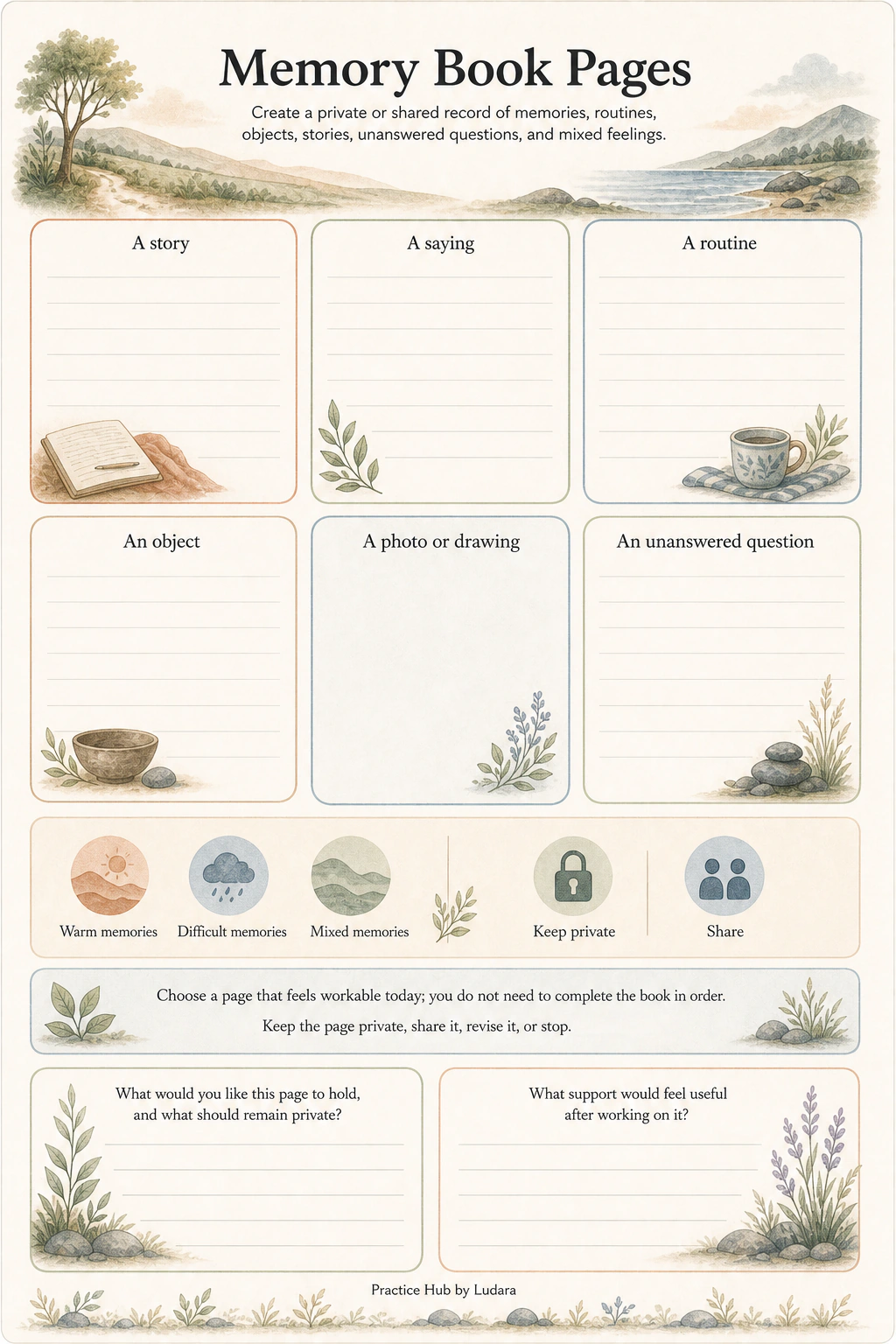
Make a book for memories, everyday details, questions, and mixed feelings. You decide what stays private.
For clinician-facilitated use
This is a professional resource, not a child-facing online service. A licensed clinician or other qualified adult must determine suitability, explain and adapt the activity, and supervise its use. Do not direct a child to access this webpage independently or enter client information.
An adult professional should download the full-resolution WebP, which includes margins for printing. Read the guidance below before using it.
How to use it
- Pick a page that feels workable today. You do not have to start at the beginning or go in order.
- Add a photo, drawing, object, story, saying, routine, question, or blank space.
- Include warm, difficult, uncertain, ordinary, or mixed memories if you want.
- Keep the page private, share it, revise it, or stop.

Questions to explore
- What would you like this page to hold, and what should remain private?
- What support would feel useful after working on it?

Notes for the person facilitating
Follow the participant's language for the person, relationship, loss, and memory. Do not assume closeness, idealize the relationship, correct contradictory memories, or require a coherent tribute; plan an ending and assess storage/privacy.
Ways to adapt the activity
- Use audio, collage, objects, dictation, or a digital book.
- Offer pages for limited contact, unanswered questions, or no memory.
- Complete one small section and return only if desired.
Professional use and fit
Before using this resource, a licensed clinician or other qualified adult should decide whether it fits the person, setting, goals, accessibility needs, and applicable local policies.