Coping & Regulation · CR-10
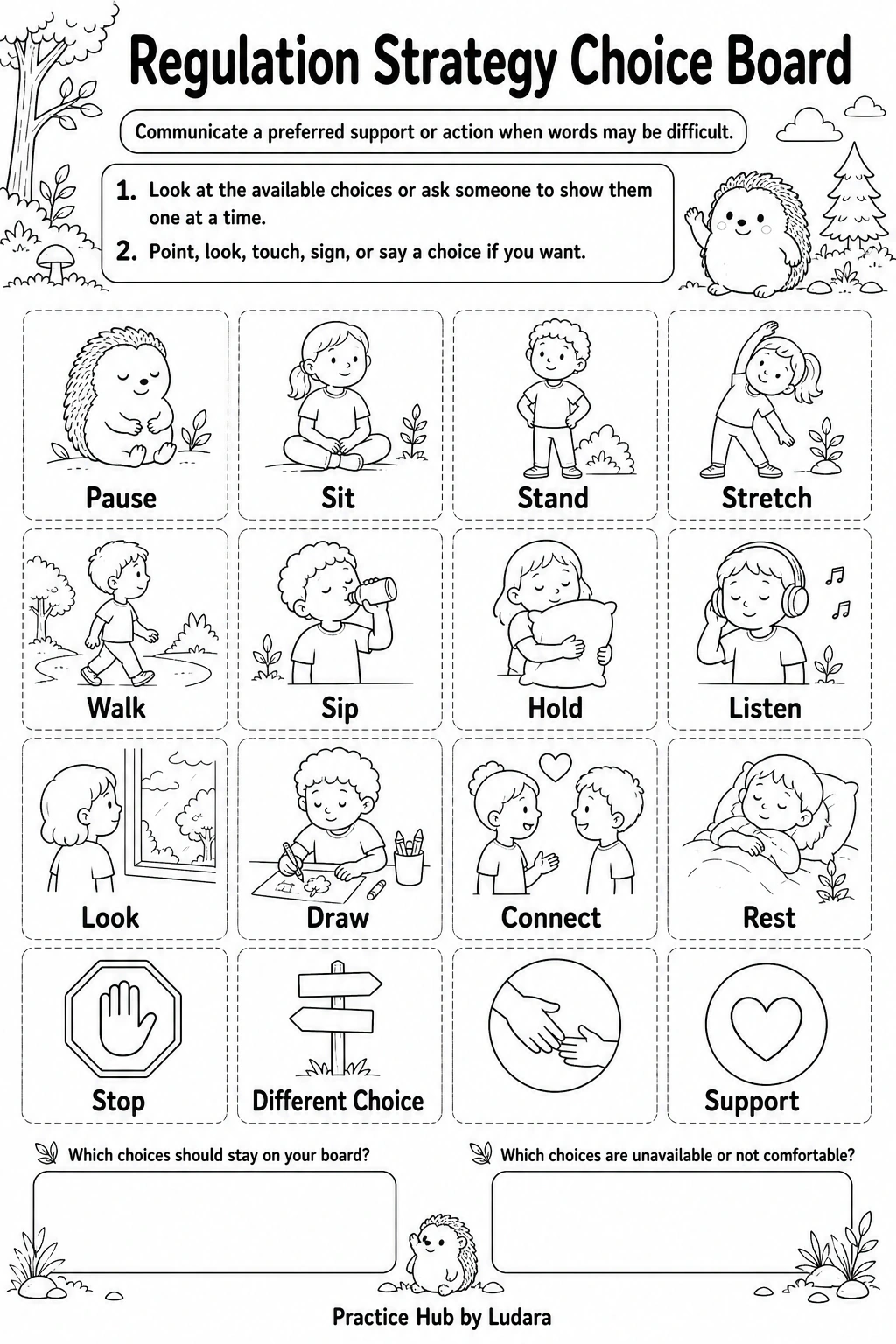
Regulation Strategy Choice Board
Communicate a preferred support or action when words may be difficult.
Clinician-created · facilitator review requiredFor clinician-facilitated use
This is a professional resource, not a child-facing online service. A licensed clinician or other qualified adult must determine suitability, explain and adapt the activity, and supervise its use. Do not direct a child to access this webpage independently or enter client information.
The full-resolution WebP includes print-safe margins and should be downloaded by an adult professional. Read the guidance below before using the page.
How to use it
- Look at the available choices or ask someone to show them one at a time.
- Point, look, touch, sign, or say a choice if you want.
- Choose something else, stop, or ask for support at any time.

Reflection prompts
- Which choices should stay on your board?
- Which choices are unavailable or not comfortable?
- How should another person respond when you select one?

Facilitator guidance
Offer only safe, genuinely available choices and honor the person's communication method. The board supports communication; it must not restrict choice or replace individualized AAC guidance.
Adaptations & accessibility
- Customize symbols, photos, language, spacing, and access method with the AAC team when applicable.
- Use a two-choice strip or partner-assisted scanning.
- Add a clear stop, no, different choice, and support option.
Professional-use review
Standard licensed-clinician and AAC/accessibility review required before use.