Coping & Regulation · CR-06
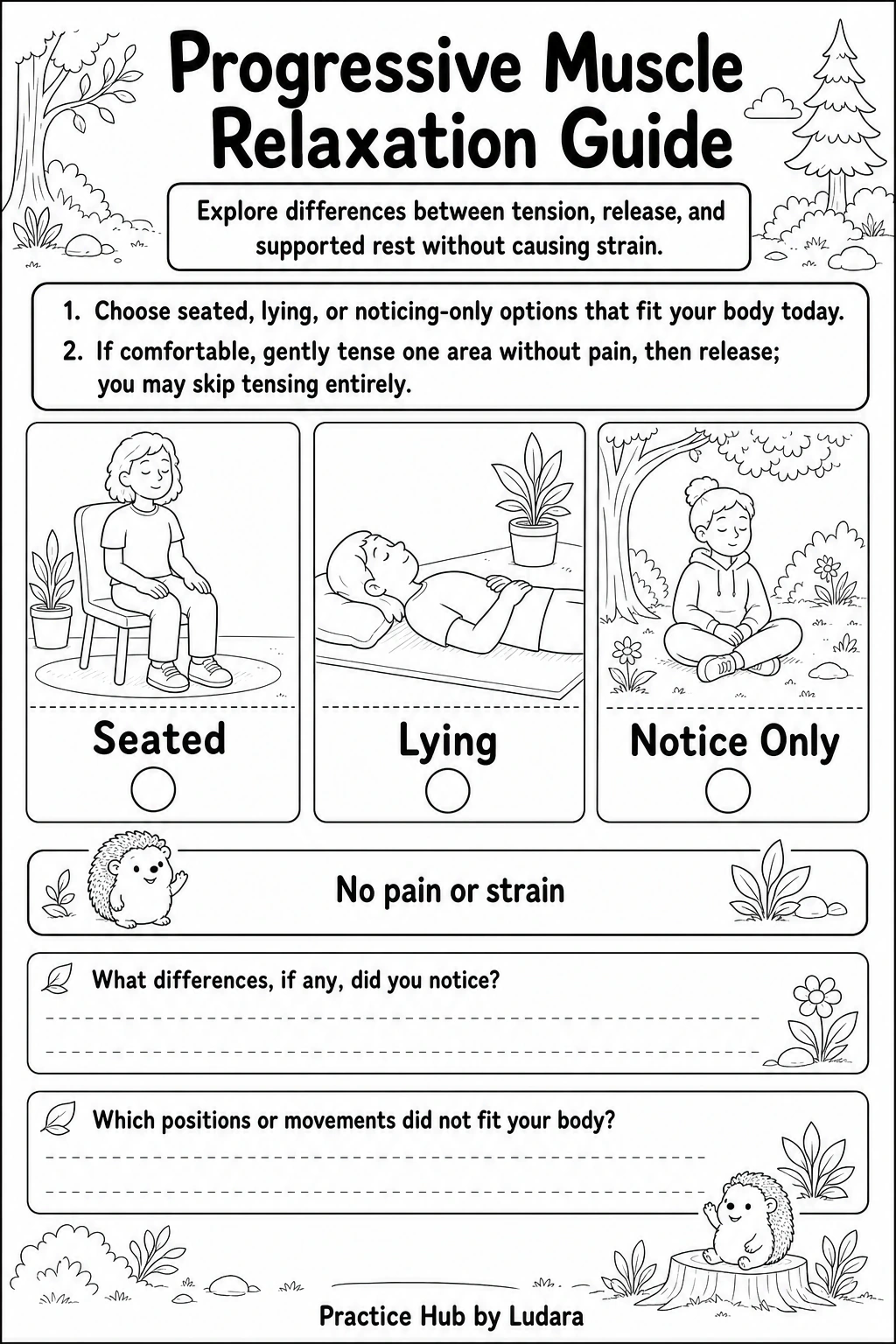
Progressive Muscle Relaxation Guide
Explore differences between tension, release, and supported rest without causing strain.
Clinician-created · specialist review requiredFor clinician-facilitated use
This is a professional resource, not a child-facing online service. A licensed clinician or other qualified adult must determine suitability, explain and adapt the activity, and supervise its use. Do not direct a child to access this webpage independently or enter client information.
The full-resolution WebP includes print-safe margins and should be downloaded by an adult professional. Read the guidance below before using the page.
How to use it
- Choose seated, lying, or noticing-only options that fit your body today.
- If comfortable, gently tense one area without pain, then release; you may skip tensing entirely.
- Stop immediately if you notice pain, dizziness, numbness, or increased discomfort.

Reflection prompts
- What differences, if any, did you notice?
- Which positions or movements did not fit your body?
- What support or adjustment would help now?

Facilitator guidance
Screen for pain, injury, mobility, neurological, respiratory, and other relevant concerns within professional scope. Never encourage force, maximal effort, or working through pain.
Adaptations & accessibility
- Use supported rest and noticing without any muscle tensing.
- Limit the practice to one comfortable area or use imagined movement.
- Adapt positions for mobility devices, seating, or bed-based access.
Professional-use review
Licensed-clinician review and appropriate medical/mobility review required before use.