Coping & Regulation · CR-05
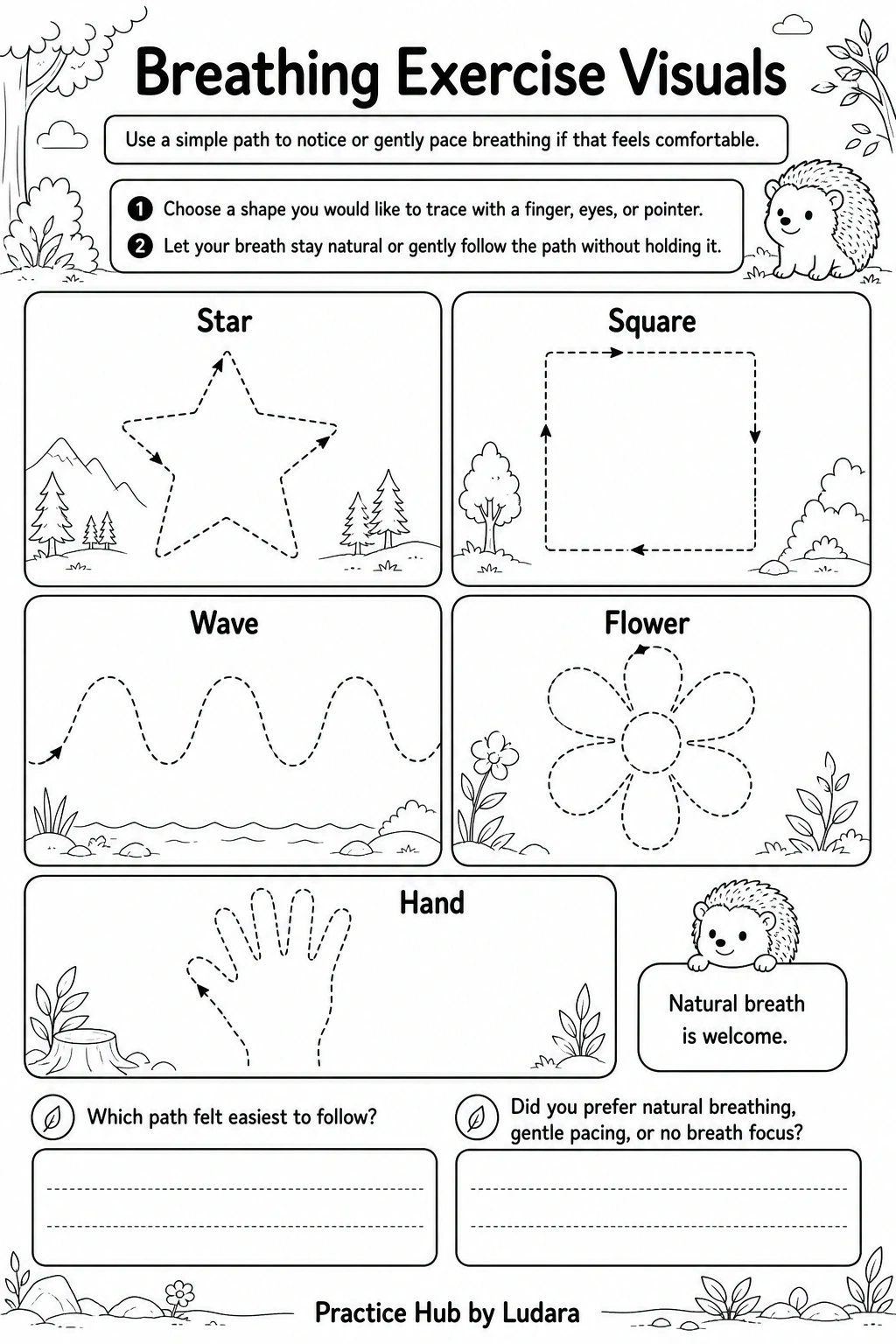
Breathing Exercise Visuals
Use a simple path to notice or gently pace breathing if that feels comfortable.
Clinician-created · facilitator review requiredFor clinician-facilitated use
This is a professional resource, not a child-facing online service. A licensed clinician or other qualified adult must determine suitability, explain and adapt the activity, and supervise its use. Do not direct a child to access this webpage independently or enter client information.
The full-resolution WebP includes print-safe margins and should be downloaded by an adult professional. Read the guidance below before using the page.
How to use it
- Choose a shape you would like to trace with a finger, eyes, or pointer.
- Let your breath stay natural or gently follow the path without holding it.
- Pause or choose a different activity if focusing on breath feels uncomfortable.

Reflection prompts
- Which path felt easiest to follow?
- Did you prefer natural breathing, gentle pacing, or no breath focus?
- What would feel comfortable next?

Facilitator guidance
Model flexible pacing and never require breath holding or deep breathing. Offer a visual-tracing-only option and watch for dizziness, distress, or respiratory limitations.
Adaptations & accessibility
- Trace with a stylus, gaze, or another person's verbal pacing.
- Use the paths only as a visual attention activity.
- Enlarge one path and remove directional marks.
Professional-use review
Standard licensed-clinician review required before use; confirm medical and developmental fit.