Anxiety Support · AN-10
Anxiety Coping Plan Cards
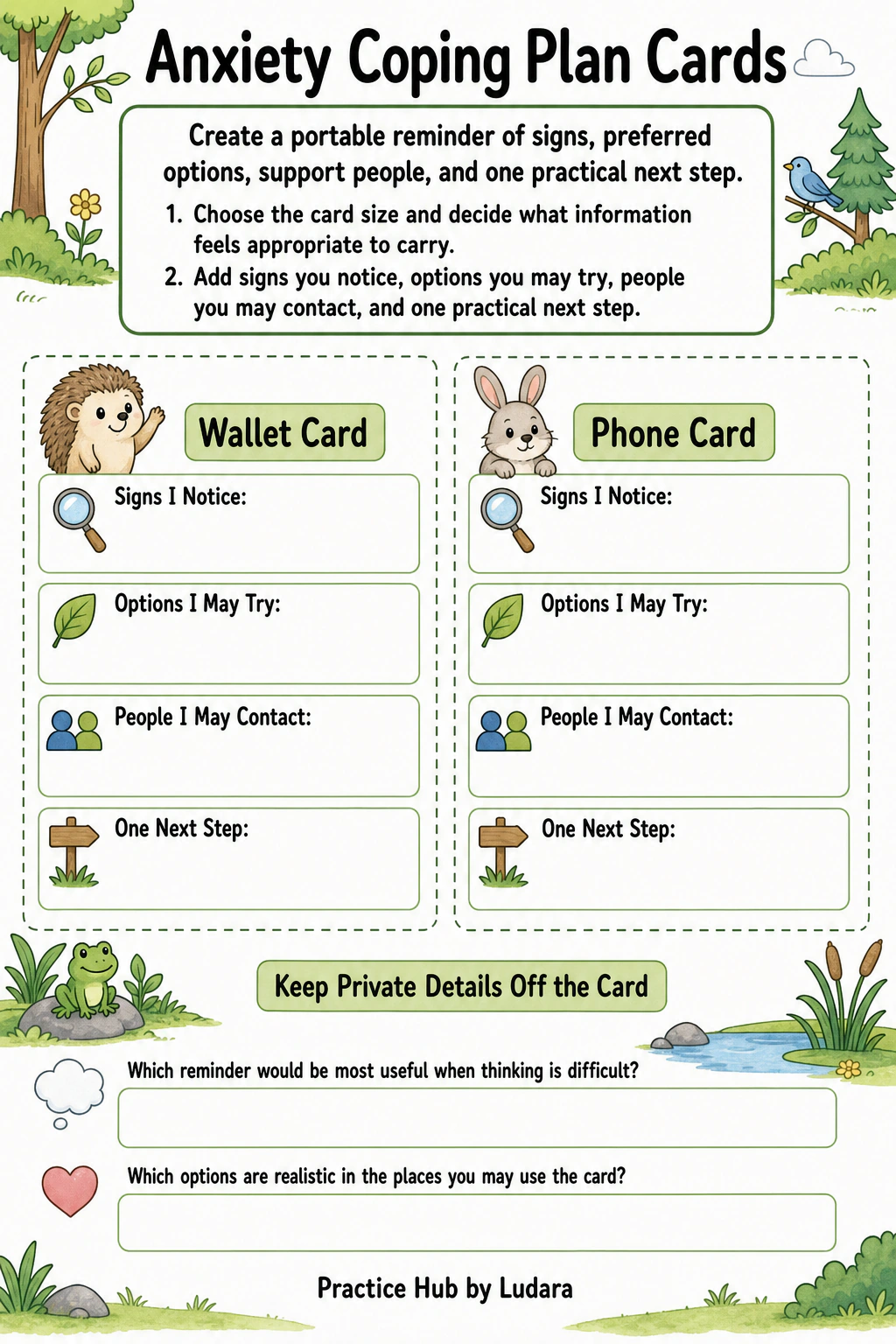
Make a card you can carry with signs of anxiety you notice, coping options you prefer, people you can contact, and a practical next step.
For clinician-facilitated use
This is a professional resource, not a child-facing online service. A licensed clinician or other qualified adult must determine suitability, explain and adapt the activity, and supervise its use. Do not direct a child to access this webpage independently or enter client information.
An adult professional should download the full-resolution WebP, which includes margins for printing. Read the guidance below before using it.
How to use it
- Choose the card size and decide what information feels appropriate to carry.
- Add signs you notice, options you may try, people you may contact, and one practical next step.
- Review privacy before storing the card and update or stop using it whenever you want.

Questions to explore
- Which reminder would be most useful when thinking is difficult?
- Which options are realistic in the places you may use the card?
- Who should know about the plan, if anyone?

Notes for the person facilitating
Create collaboratively and distinguish this coping reminder from emergency, crisis, or comprehensive safety planning. Do not include private details that create risk if the card or phone is seen by others.
Ways to adapt the activity
- Use icons, a lock-screen-safe version, or a discreet folded card.
- Create separate cards for home, school, work, or travel.
- Use one-step and full-plan versions with large print.
Professional use and fit
Before using this resource, a licensed clinician or other qualified adult should decide whether it fits the person, setting, goals, accessibility needs, and applicable local policies.