Anxiety Support · AN-09
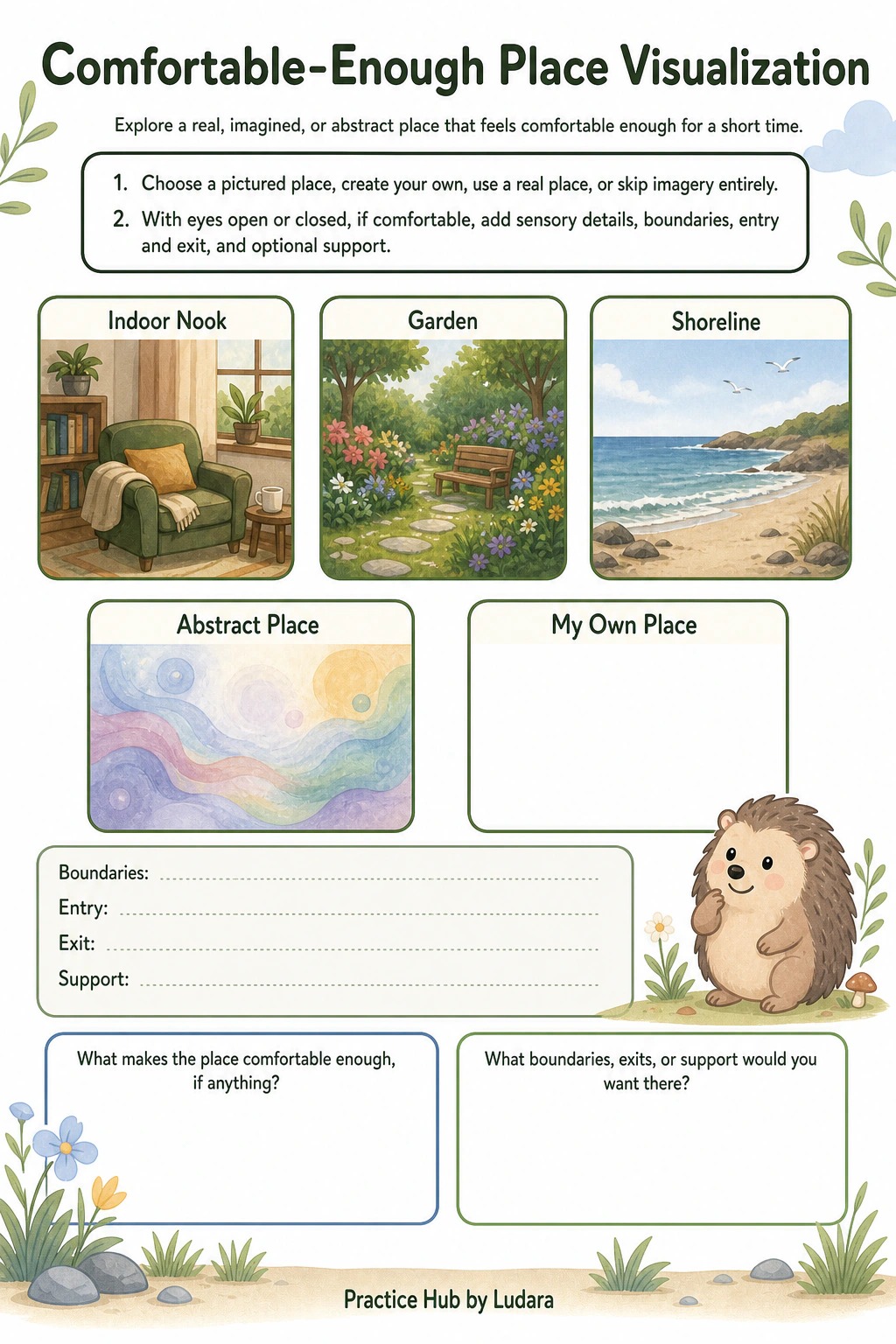
Comfortable-Enough Place Visualization
Explore a real, imagined, or abstract place that feels comfortable enough for now. You can skip imagery entirely.
For clinician-facilitated use
This is a professional resource, not a child-facing online service. A licensed clinician or other qualified adult must determine suitability, explain and adapt the activity, and supervise its use. Do not direct a child to access this webpage independently or enter client information.
An adult professional should download the full-resolution WebP, which includes margins for printing. Read the guidance below before using it.
How to use it
- Choose a pictured place, create your own, use a real place, or skip imagery entirely.
- With eyes open or closed, if comfortable, add sensory details, boundaries, entry and exit, and optional support.
- Stop and orient to the current room if imagery feels distant, unsafe, or uncomfortable.

Questions to explore
- What makes the place comfortable enough, if anything?
- What boundaries, exits, or support would you want there?
- What helps you reconnect with the current room afterward?

Notes for the person facilitating
Offer this as one optional resourcing activity and avoid assuming everyone can visualize or identify a safe place. Keep orientation, choice, and visible exit cues available throughout.
Ways to adapt the activity
- Use a real object, photograph, sound, or present-room location instead of imagery.
- Choose comfortable enough, neutral, or protected rather than safe.
- Keep eyes open and describe only external features.
Professional use and fit
Before using this resource, a licensed clinician or other qualified adult should decide whether it fits the person, setting, goals, accessibility needs, and applicable local policies.