Anxiety Support · AN-06
Anxiety Body Map
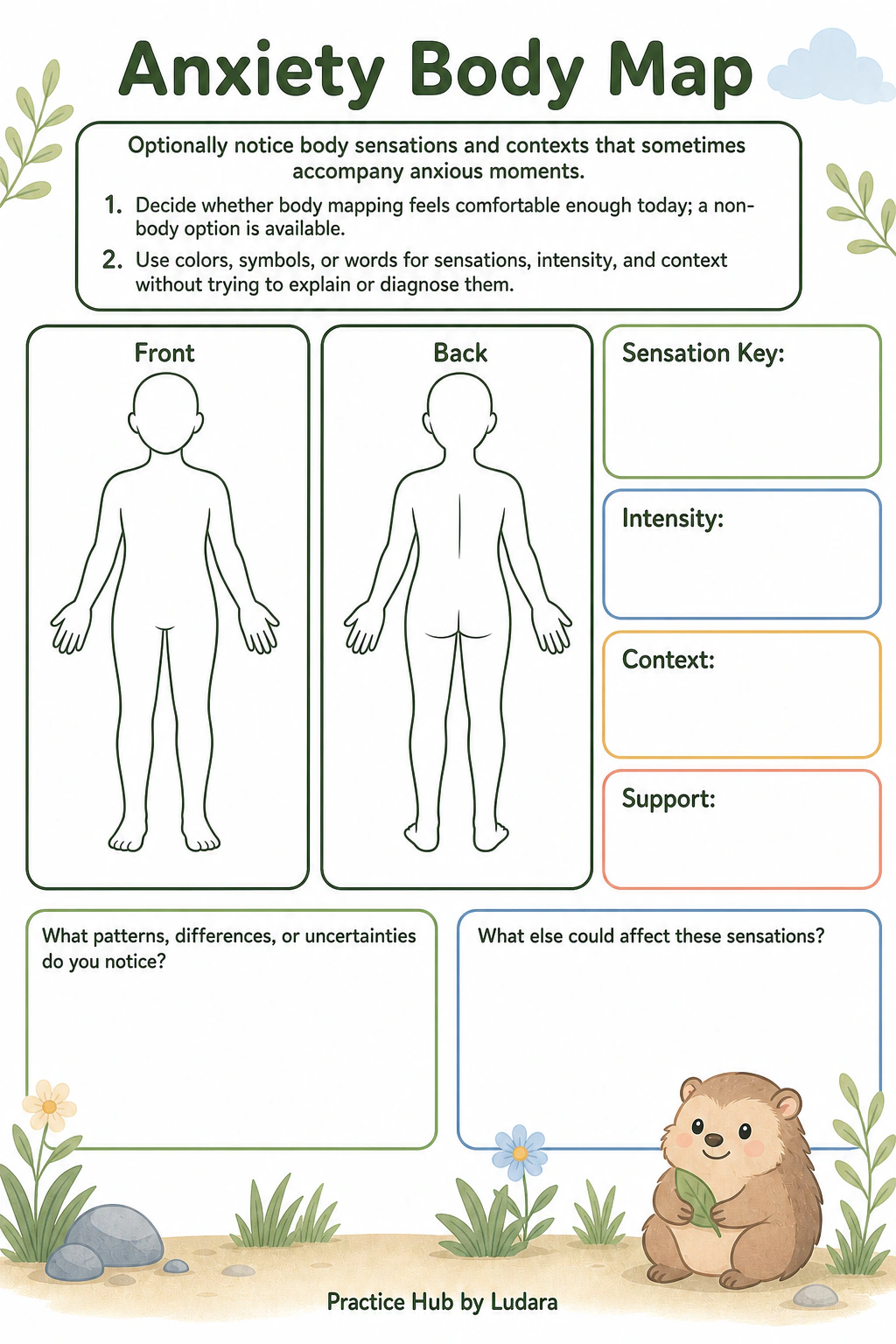
If paying attention to your body feels comfortable, explore sensations you sometimes notice when anxious and what else is happening at the time.
For clinician-facilitated use
This is a professional resource, not a child-facing online service. A licensed clinician or other qualified adult must determine suitability, explain and adapt the activity, and supervise its use. Do not direct a child to access this webpage independently or enter client information.
An adult professional should download the full-resolution WebP, which includes margins for printing. Read the guidance below before using it.
How to use it
- Decide whether body mapping feels comfortable enough today; a non-body option is available.
- Use colors, symbols, or words for sensations, intensity, and context without trying to explain or diagnose them.
- Stop, orient to the room, or seek support if the activity increases discomfort; discuss new or concerning physical symptoms with an appropriate professional.

Questions to explore
- What patterns, differences, or uncertainties do you notice?
- What else could affect these sensations?
- What support would feel appropriate now?

Notes for the person facilitating
Use with trauma-sensitive pacing and avoid attributing physical sensations automatically to anxiety. Stay within professional scope and support appropriate medical evaluation when indicated.
Ways to adapt the activity
- Use a weather map, object outline, or abstract page instead of a body.
- Allow pointing, stickers, or verbal description.
- Choose a body outline and position that reflect the person's mobility and identity preferences.
Professional use and fit
Before using this resource, a licensed clinician or other qualified adult should decide whether it fits the person, setting, goals, accessibility needs, and applicable local policies.